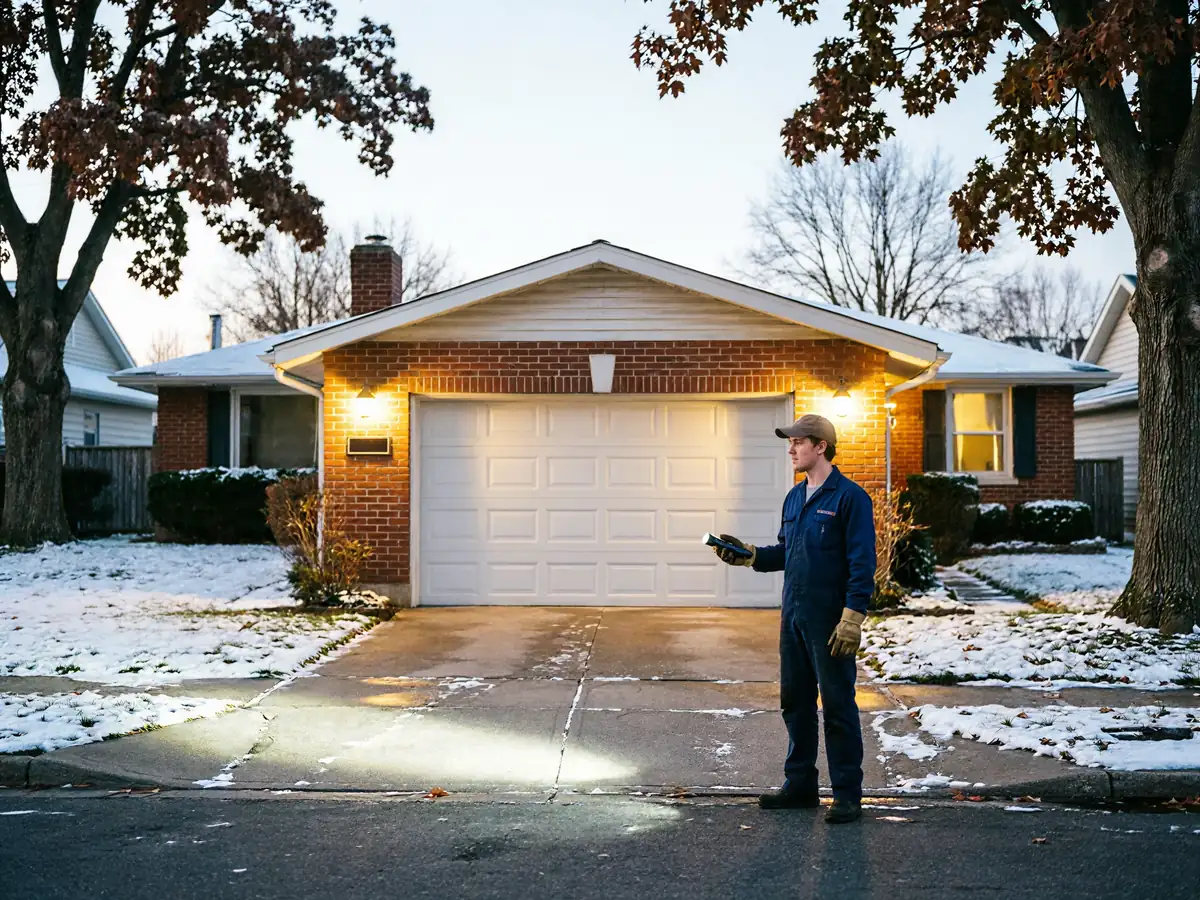
With a median build year around 1972, and most of that stock dates to the 1960s and 70s. That matters because a door installed on a house from that era is working with hardware designs that are two or three generations behind what you'd buy today - plain steel rollers instead of nylon, torsion springs rated for lighter sectional doors, tracks bolted to jambs that have shifted a little over fifty-some years.
02
Add the cold moderate climate band this area sits in and you get a specific kind of wear
Steel contracts in cold air. A track that's a hair out of plumb in July is more out of plumb in January, and a spring that's already fatigued loses tension faster when it's cycling through temperature swings every day. The noise a door makes isn't random - it's usually that combination of an older setup and a climate that stresses metal twice a day, every day, for months.
When Waiting Is Fine
Not every sound is a warning. A door that makes a soft rumble as it travels is usually just rollers on a track doing their job - that's normal, especially on the older steel-roller setups common in houses from the 1960s and 70s. A single pop when the door first moves on a cold morning is often just the torsion spring and the drum taking up slack after sitting overnight; if it happens once and then the door runs quiet, that's not a repair call.
A little squeak at the hinges that goes away after the door's been used a few times that day is also low priority - it's friction, not failure. If the door opens and closes at a normal speed, sits level, and doesn't reverse on its own, you can usually let a minor noise ride until your next service visit rather than treating it as urgent. The exception is anything that's new, loud, and getting worse week over week - that's a different category entirely.
The Problem
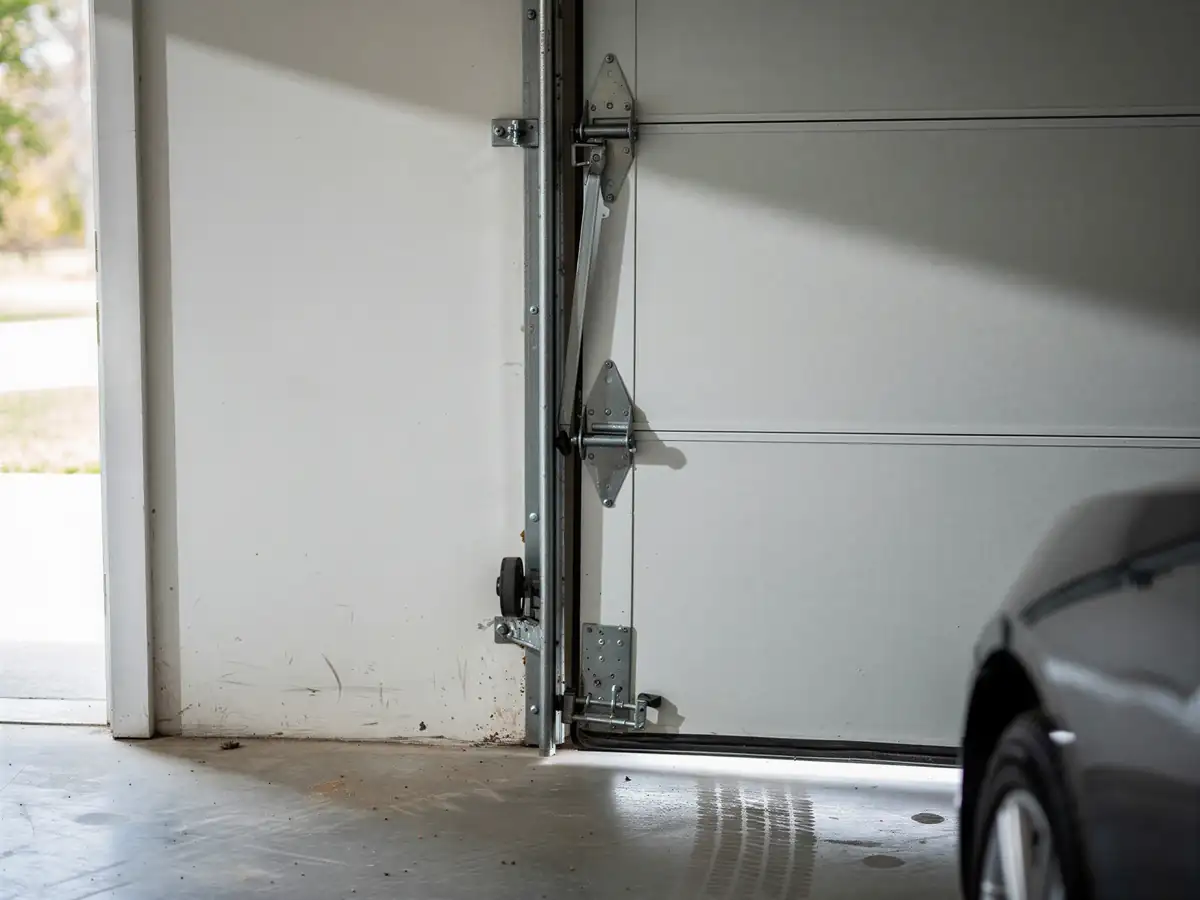
The noise that actually means something is a grinding or scraping sound that wasn't there last month, especially paired with the door running rougher than it used to. On houses from this area's dominant 1960s-70s build era, that's most often a roller that's worn past its bearing or a track that's pulled slightly away from the frame - both common once original steel rollers hit forty-plus years of daily cycles.
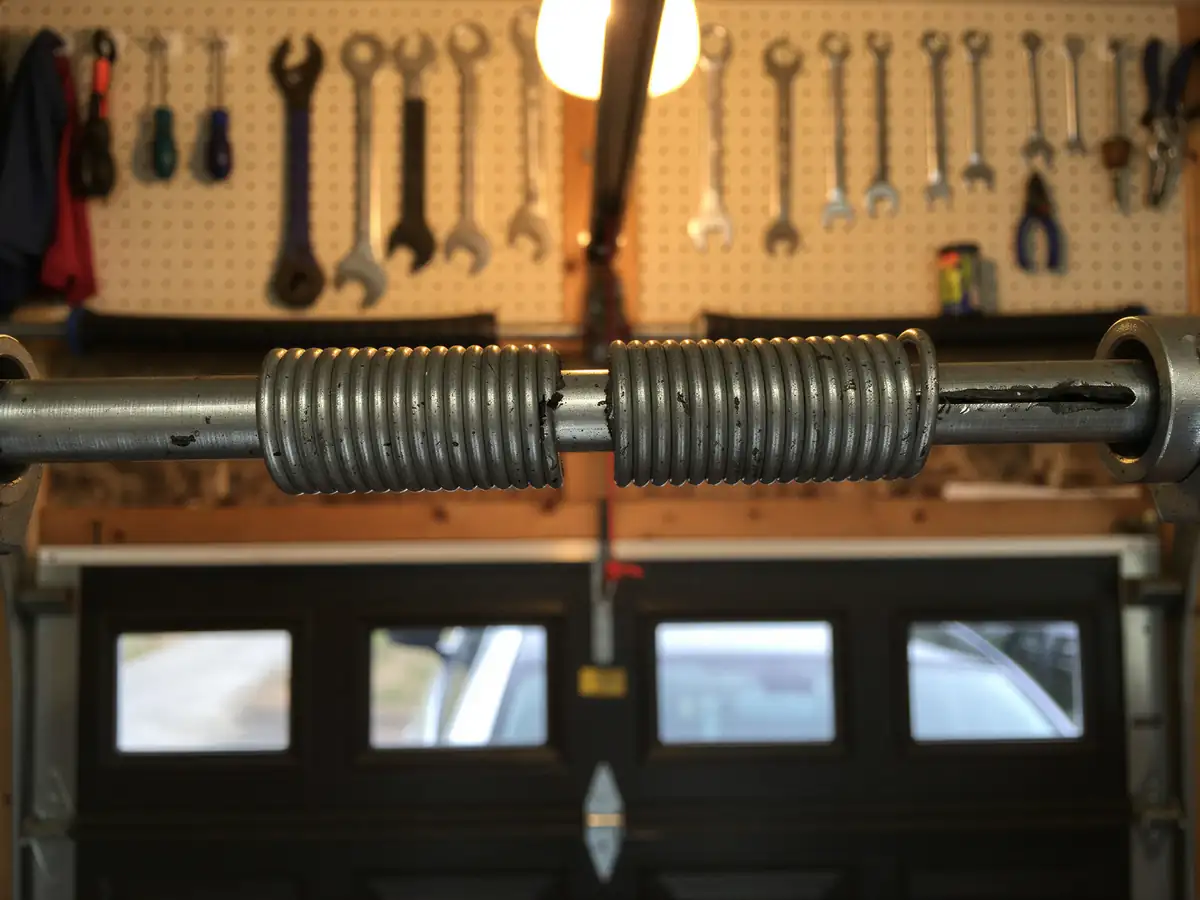
A loud bang followed by the door feeling heavy or refusing to stay up partway is a torsion spring giving out. On the original hardware still found on a lot of these doors, that spring has been cycling through cold-season contraction for decades, and metal fatigue doesn't announce itself until it lets go. A rhythmic thud once per rotation usually means a cable has started to fray on the drum. None of these get quieter on their own, and running the opener against a failing spring or frayed cable is how a repair job turns into a replacement job.
What to Check
01
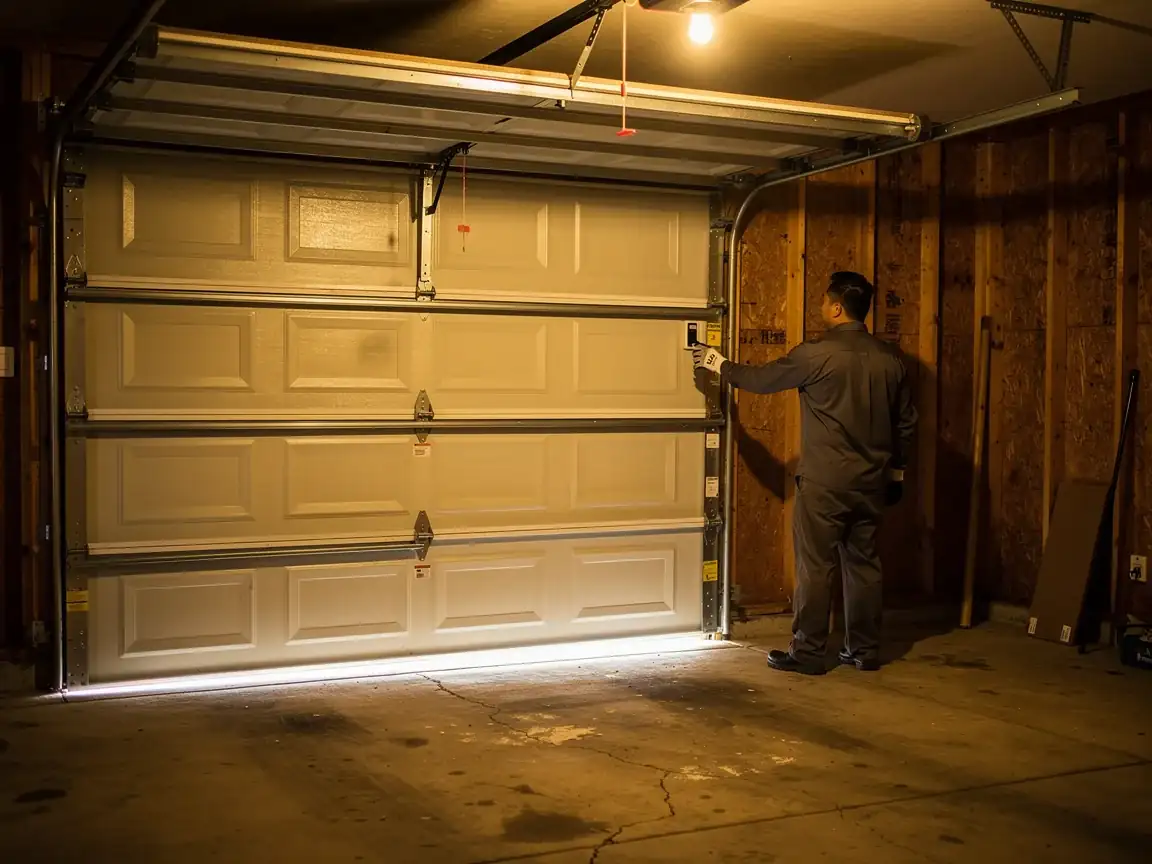
Start by watching the door run one full cycle with the lights on
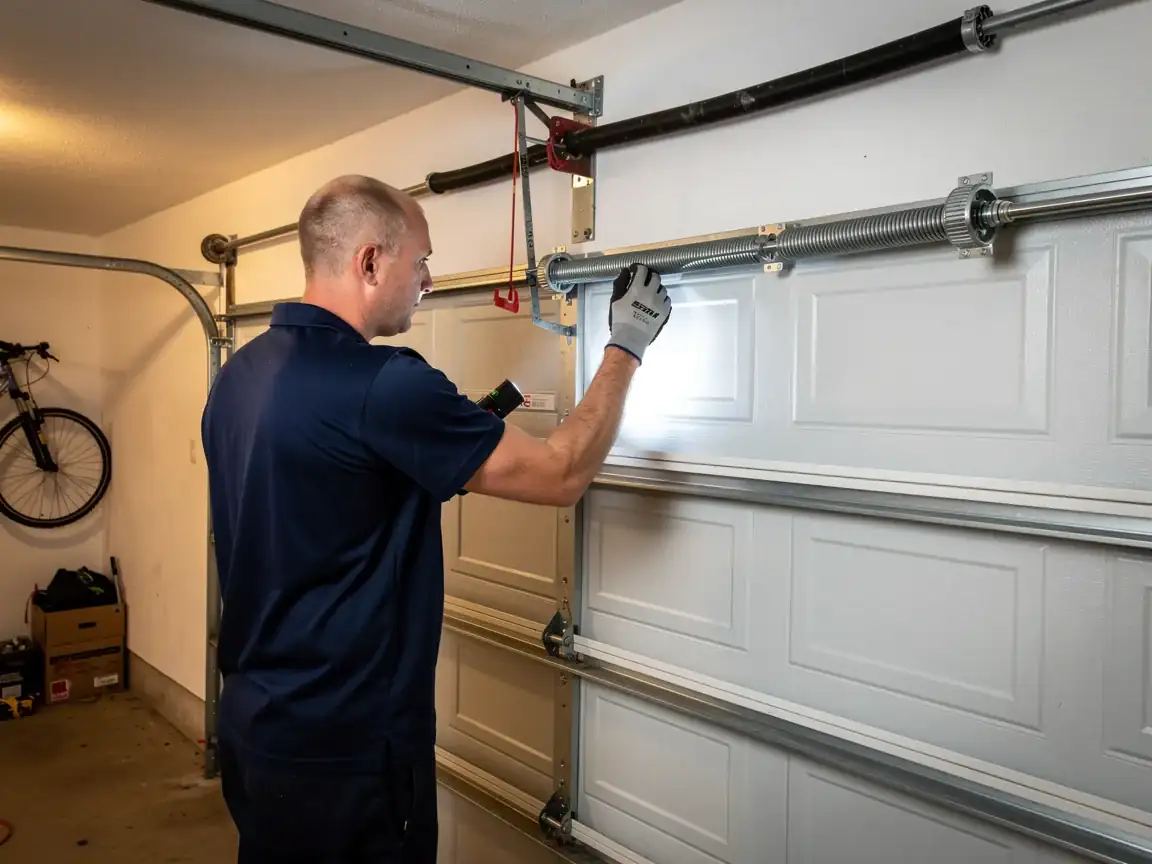
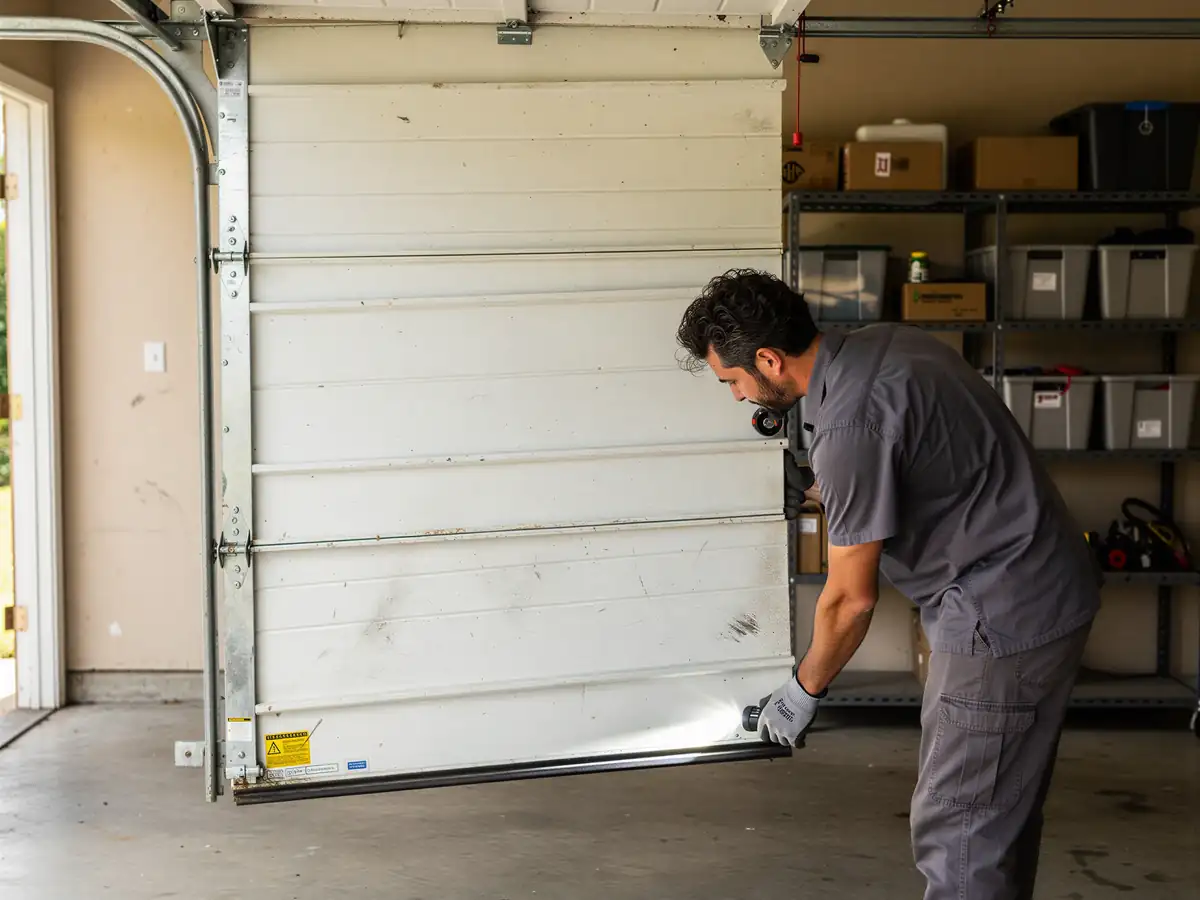
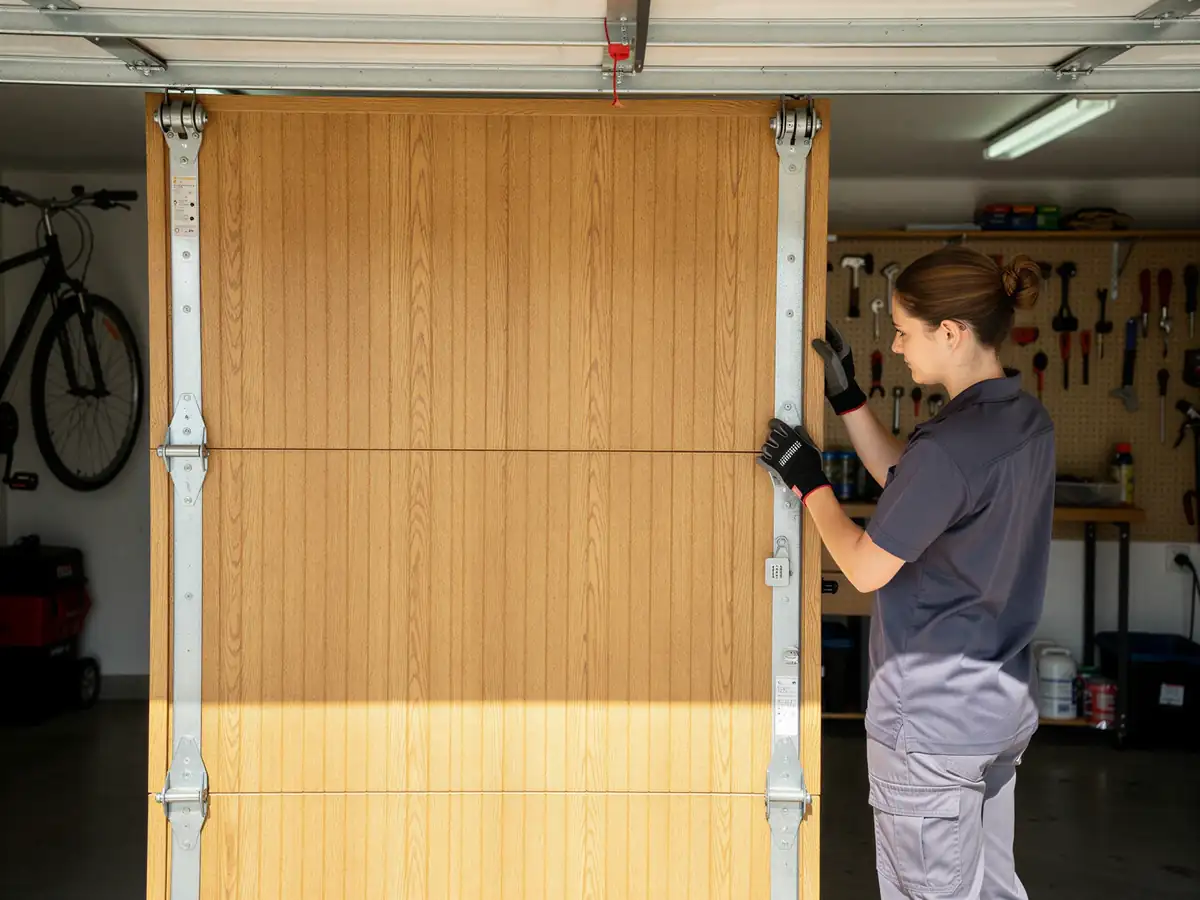
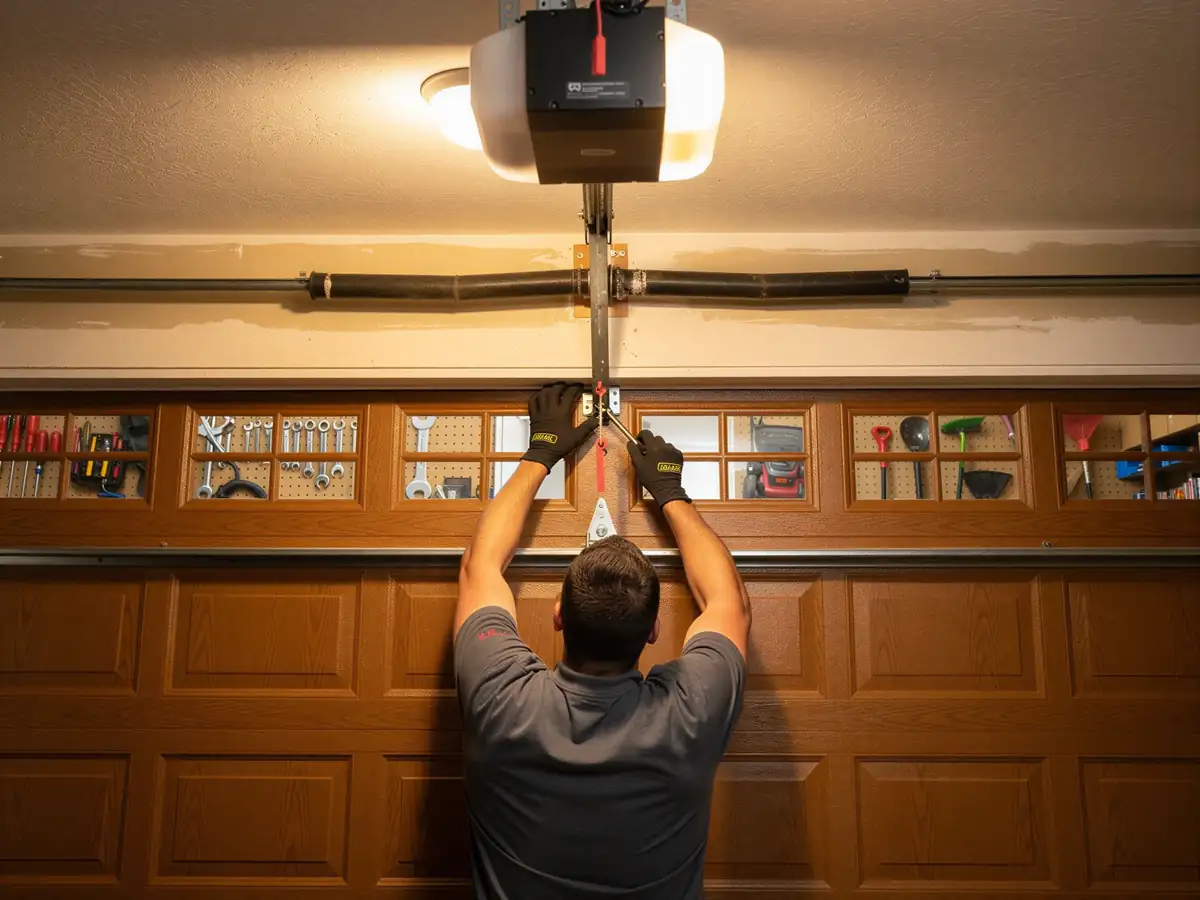
Look at the rollers - if they wobble in the track or you can see flat spots on a steel wheel, that's your grinding noise. Check the cables at the bottom bracket for fraying strands; even a few broken wires there mean the cable is close to failing. Look at the springs above the door - visible gaps in the coil, or a spring that looks stretched compared to its mate, means it's near the end.
02
We'll say plainly what we don't do here
We don't recommend DIY spring replacement, on any house, any age. Torsion springs under tension are not a job to learn on your own garage. If what you're hearing is a bang-and-sag, or grinding that's gotten worse over a week, that's a call, not a weekend project. If it's just a soft rumble or one cold-morning pop, you're fine to keep an eye on it and bring it up at your next scheduled check.
Straight answers about garage door repair in Des Plaines. Still unsure? Ask us directly.
Why does my garage door bang loudly on cold mornings?
That's usually a torsion spring that's fatigued from years of cycling through temperature swings typical of this area's cold moderate climate. On houses built in the dominant 1960s-70s era here, original springs are often still in place decades past their design life, and cold metal fails louder than warm metal.
Is grinding from the rollers a big deal?
It can be. A lot of houses in this area still run original steel rollers from their 1960s-70s build era, and once the bearing inside wears out, the wheel starts grinding against the track instead of rolling smoothly. Left alone, it accelerates track wear, so it's worth checking sooner rather than later.
Can I replace a torsion spring myself?
We don't recommend it, regardless of the house or door age. A torsion spring holds enough stored tension to cause serious injury if released wrong. If your door is banging and sagging, that's a call for a tech, not a DIY afternoon.
My door makes noise in winter but not summer - is that normal?
Some of that's expected in a cold moderate climate like this one - steel tracks and springs contract with temperature and a little extra noise in January versus July isn't unusual. But if the noise is new this winter or getting worse, it's worth having checked rather than assuming it's just the cold.