Des Plaines houses mostly date to 1938-1996, with a lot of 1960s-70s stock, and that era of door hardware doesn't seal like newer doors do. Here's what actually causes the draught.
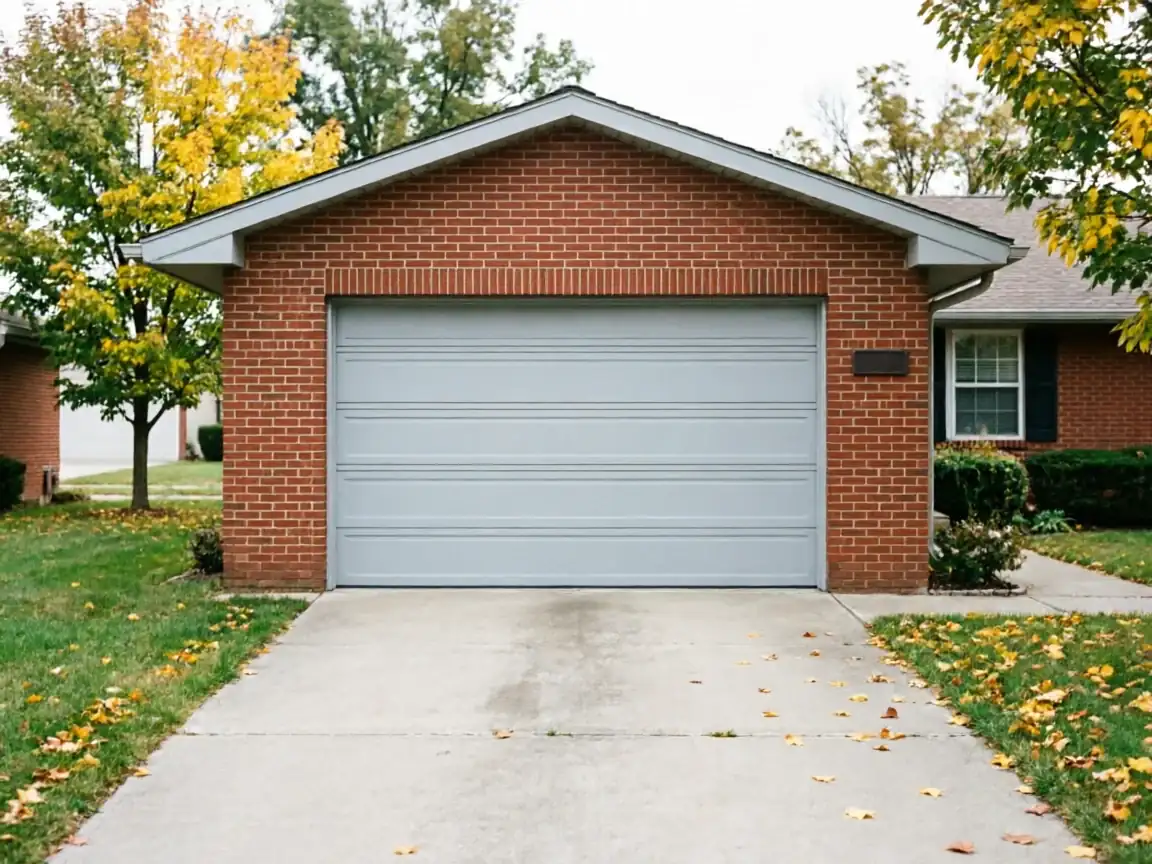
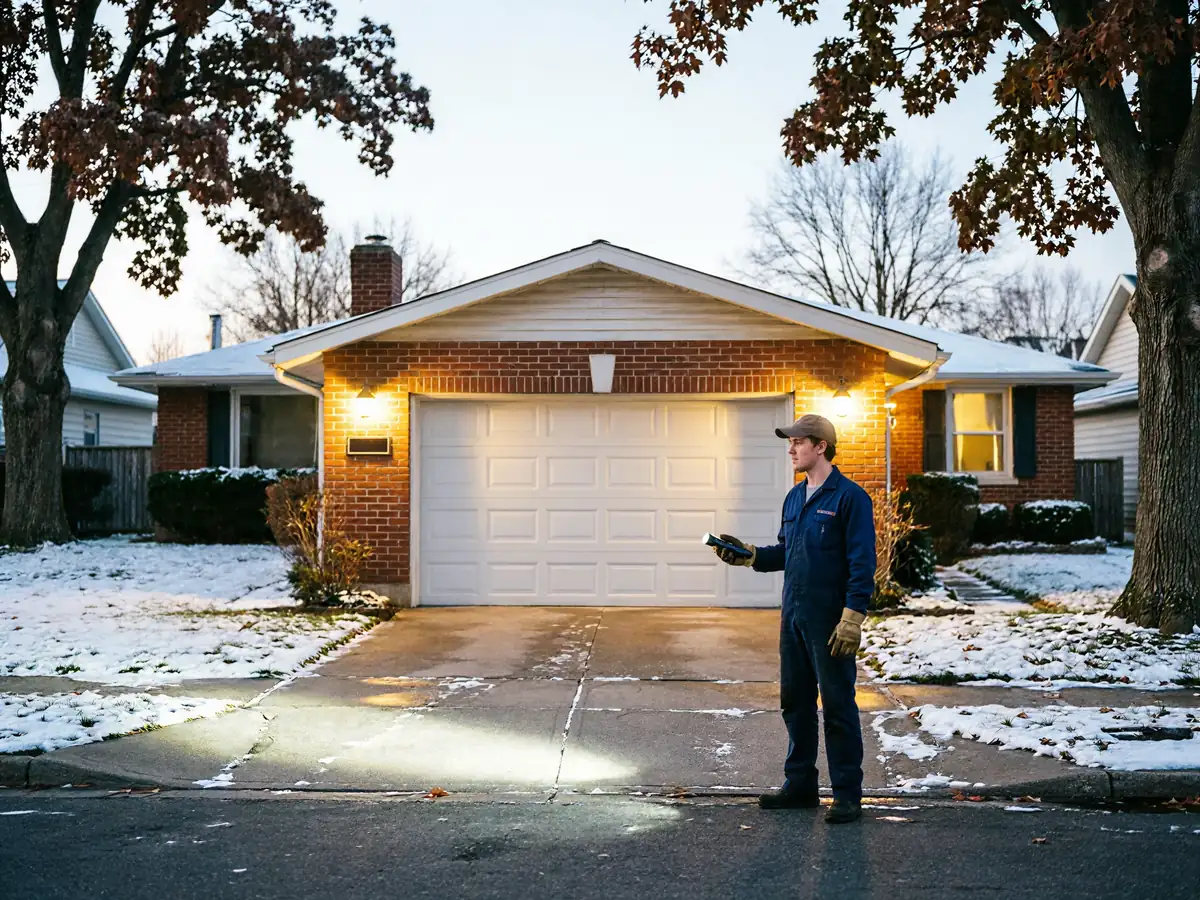
Des Plaines housing runs mostly 1938 to 1996, with the bulk of it landing in the 1960s and 70s across the area's named neighborhoods. That matters for seals more than almost anything else about a garage door. A door installed or last re-sealed during that stretch was built to a different standard than what ships today, and the rubber or vinyl bottom astragal has had decades of freeze-thaw cycling to work with. Des Plaines sits in a cold, moderate climate band, which means the seal material isn't dealing with one hard winter and done - it's contracting hard every January and stretching back out every May, year after year, on the same strip of vinyl nobody's replaced. Add a slab that's settled a half-inch since the Johnson administration and you get a gap that wasn't there when the door was new. This isn't a defect. It's just what forty-plus years of thermal cycling does to a seal, especially on the older one-piece and early sectional doors still common on this side of town. The fix is rarely the door itself - it's almost always the seal, the track alignment, or both.
When Waiting Is Fine
Not every draught is worth a service call. If you feel a thin line of air along one side of the door but the seal still looks pliable and makes contact with the floor, that's cosmetic for now - it's costing you a little heat, not threatening the door's operation. A seal that's merely worn at one corner, rather than cracked or pulled away from its retainer along most of its length, can usually wait until it's convenient rather than urgent. Same goes for a top seal that's slightly compressed but still flush. We'd rather tell you to wait and spend that money on something else than talk you into a service call for a gap that's purely about comfort. Where it stops being fine: if the gap lets in enough air to notice a temperature difference just inside the door, if you can see daylight along the bottom in more than one spot, or if the seal has shrunk enough that it's pulling loose from its channel. At that point you're not just losing heat - you're also inviting moisture and debris in, which is a different and faster-moving problem.
The Problem
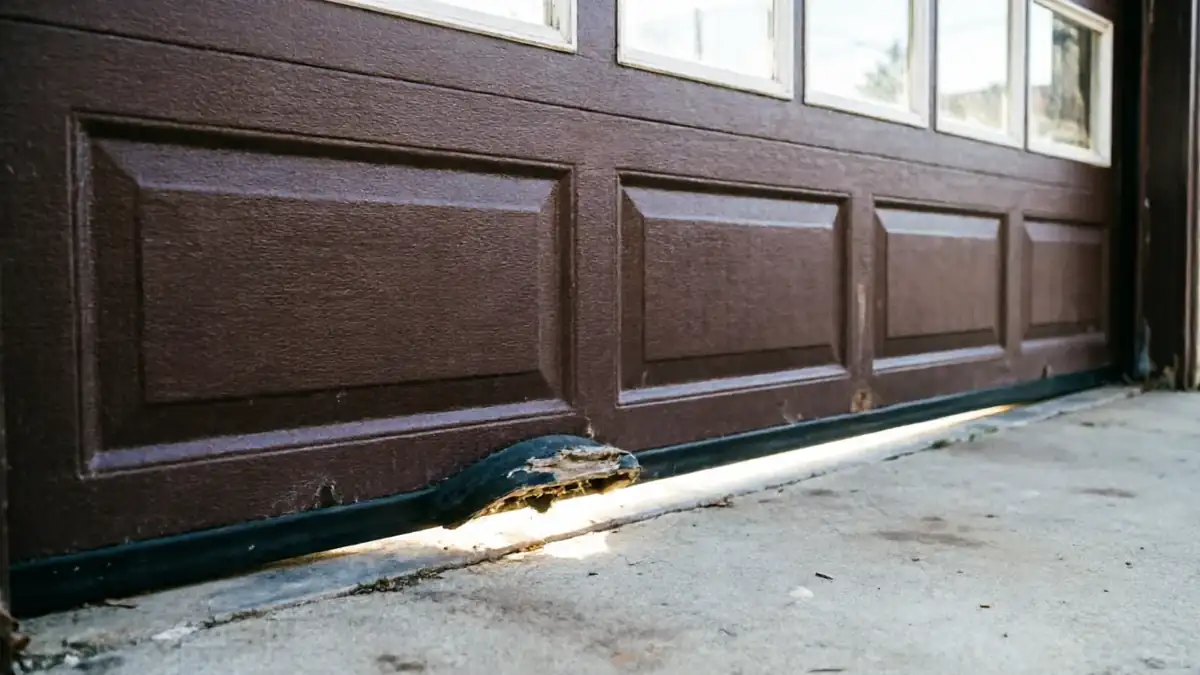
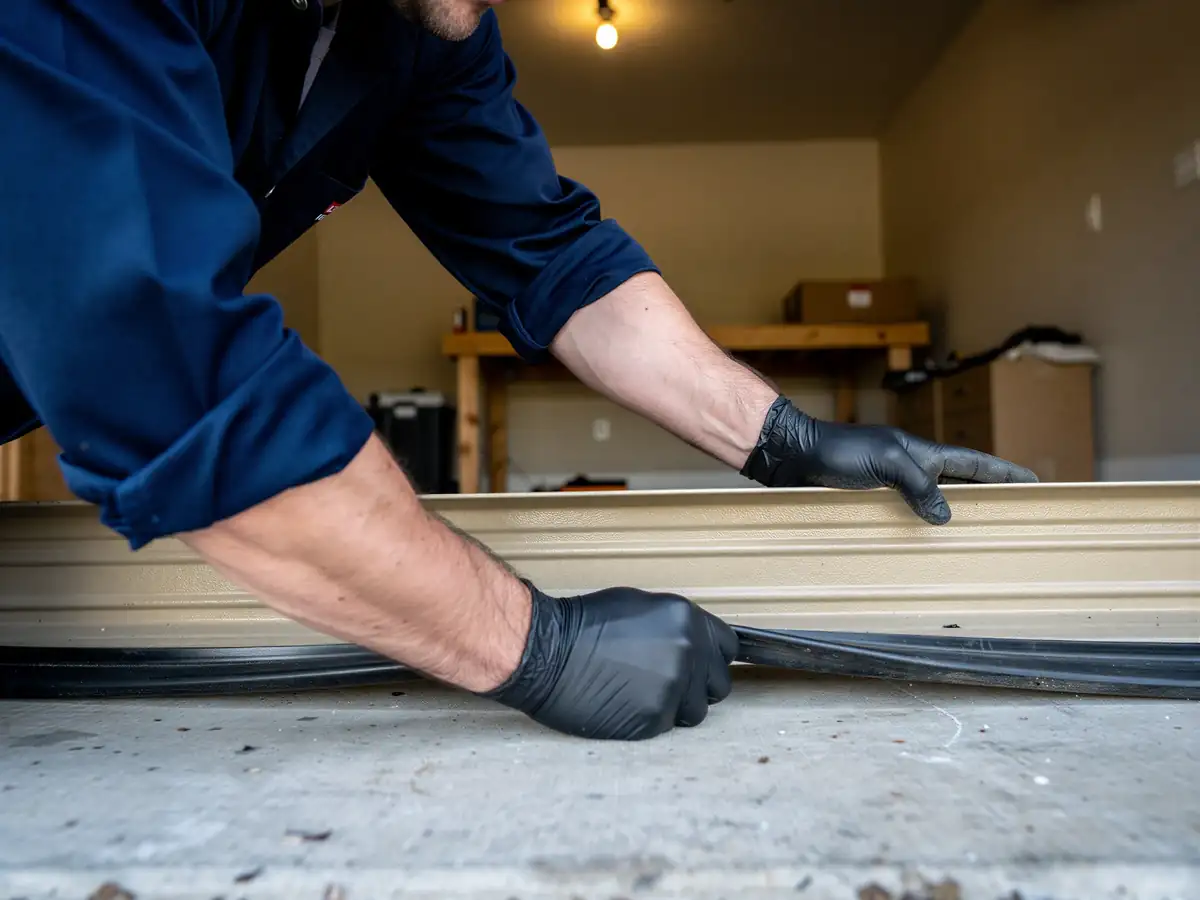
The actual mechanism is usually simple: the bottom seal (the astragal) rides in a u-channel retainer, and on doors from the 1960s-70s era common here, that retainer and the vinyl inside it were never designed to be replaced easily - they were designed to last the life of the door, which nobody expected to be fifty-plus years. Over that time the vinyl shrinks lengthwise before it visibly cracks, so the seal looks intact but no longer spans the full width of the door. That shrinkage is worse on original one-piece doors than on newer sectional panels, because the older design doesn't flex at the seams the way a sectional door does, so all the settling stress goes into the bottom seal and the slab gap rather than distributing across panel joints. Side weatherstrip has the same issue but it's less visible because it's vertical and doesn't collect light the way a bottom gap does. None of this is a design flaw - it's just thirty to sixty years of a cold-weather climate doing exactly what cold climates do to a consumable part. We can't make a forty-year-old seal act like a six-month-old one; at some point replacement is the only honest answer.
What to Check
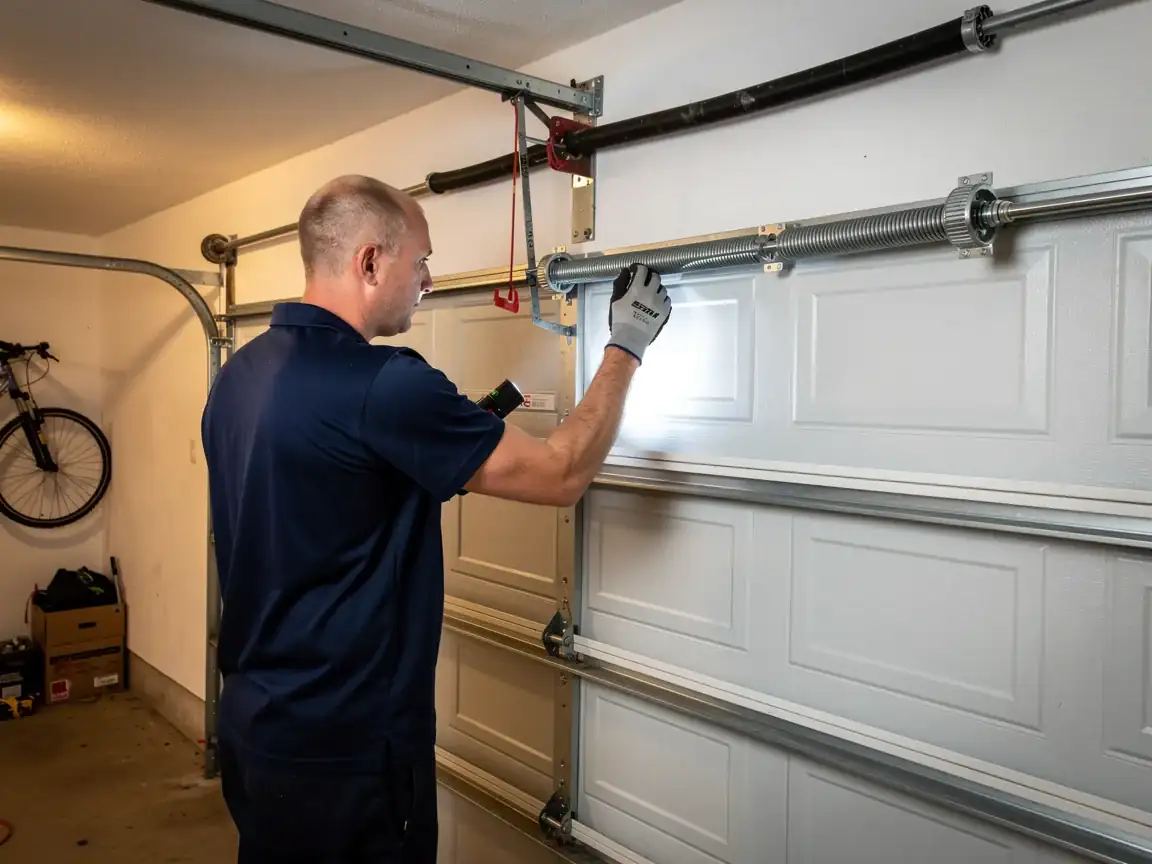
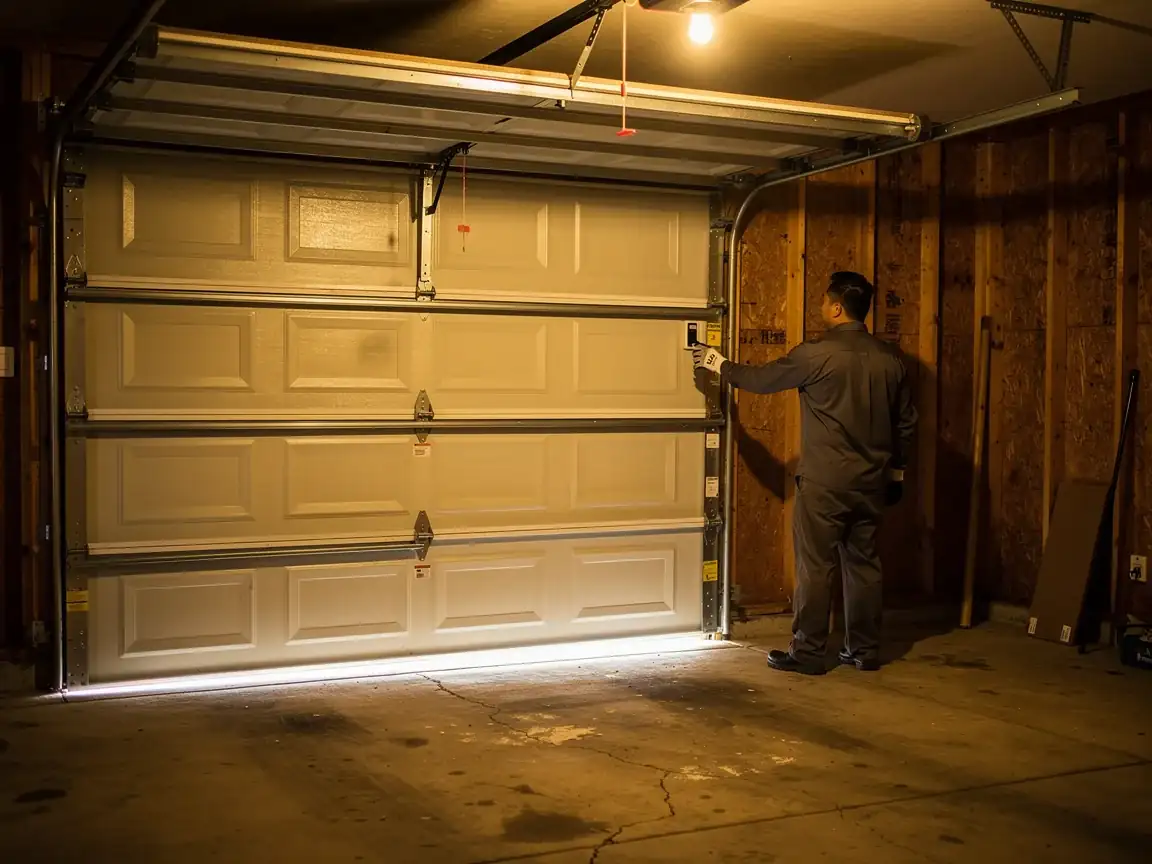
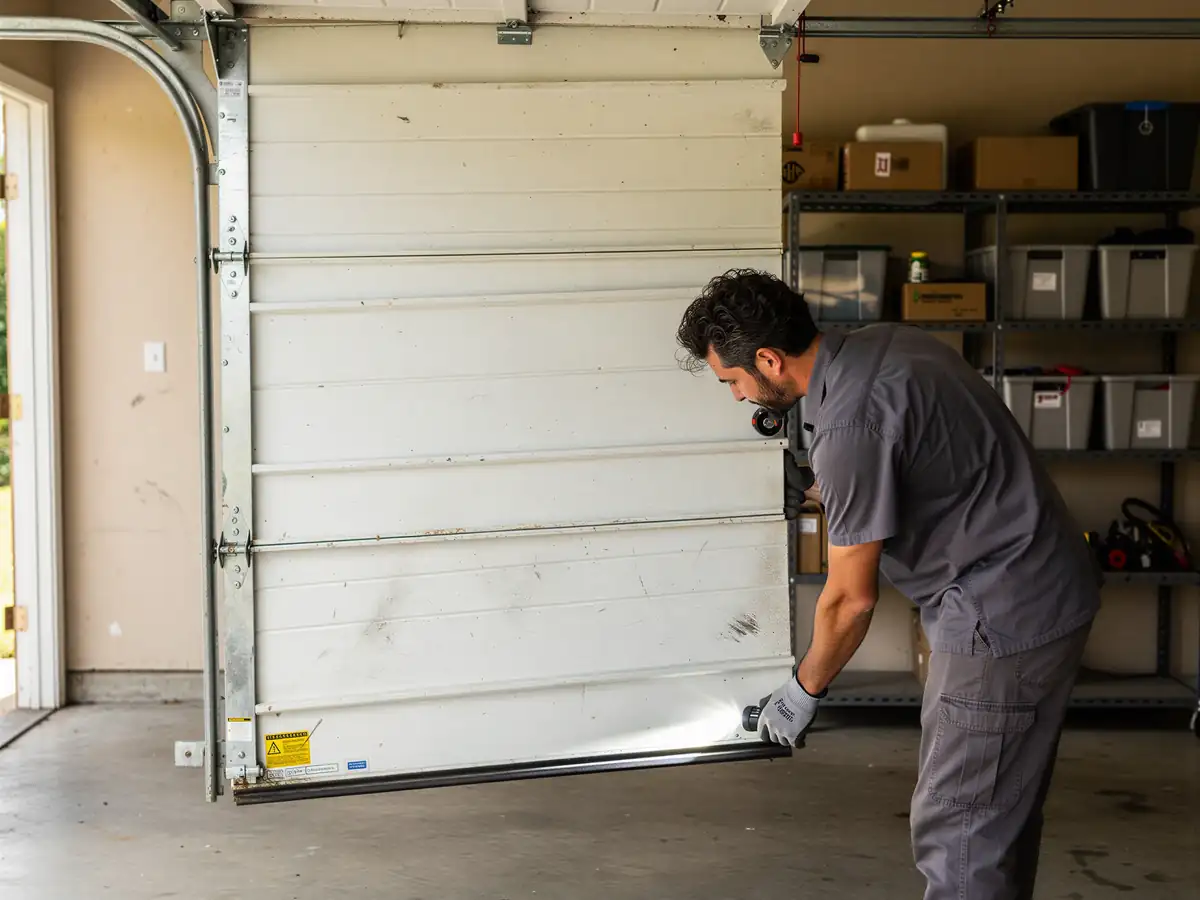
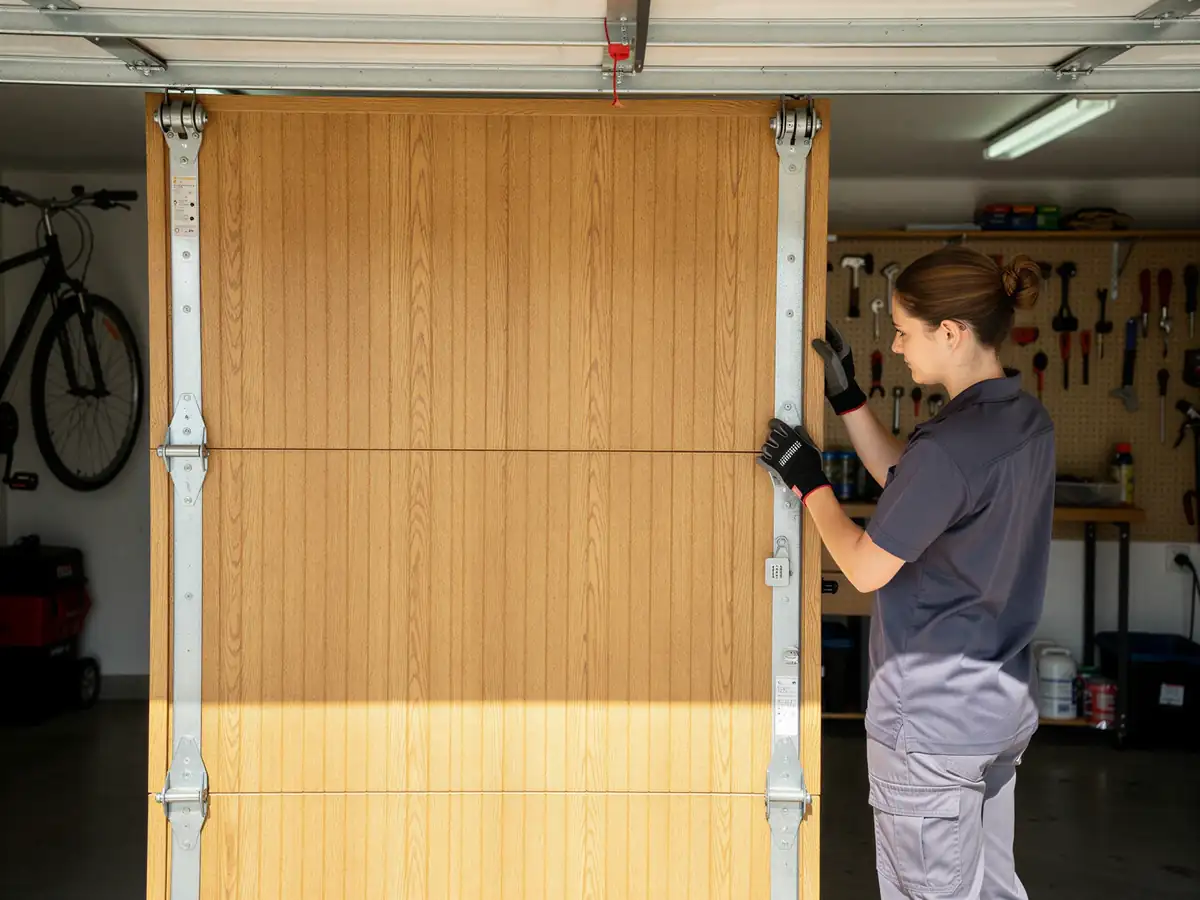
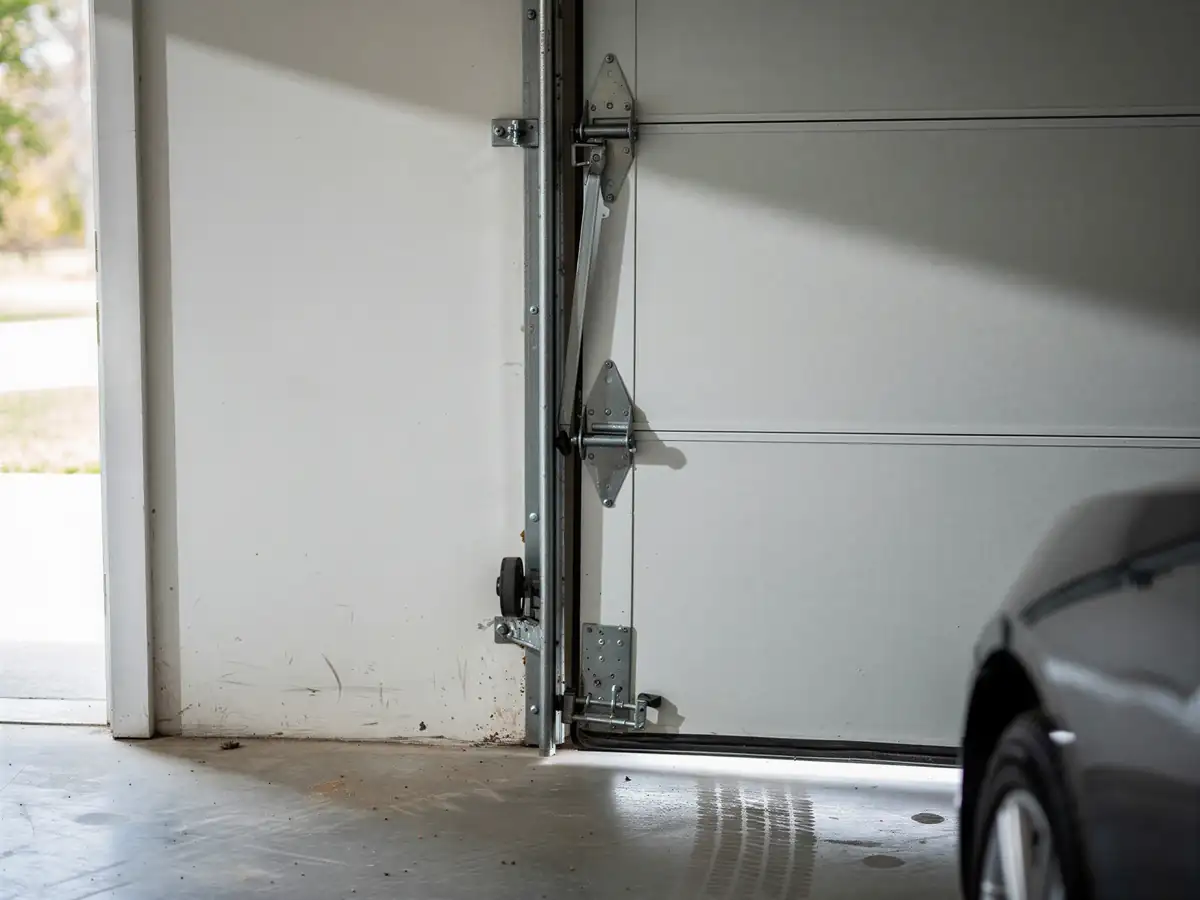
Walk the door with the lights off and look for daylight along the bottom edge first - that's the most common failure point in houses from this era. Run a hand along the seal; if it's stiff or cracked rather than slightly flexible, it's past its working life. Check where the seal meets the two bottom corners, since that's where shrinkage shows first. Next, look at the side weatherstrip where it meets the frame - a gap you can fit a finger into means it's no longer doing its job. Check the top seal where the door meets the header, especially on older one-piece doors where that seal was never as robust as what's used on newer sectional doors. Last, look at the slab itself: a visible slope or crack under the door can create a gap no seal will fully close, which is a concrete problem, not a door problem. If you find more than one of these at once, it's worth a call rather than a patch job - stacking fixes on an old u-channel retainer often just delays the same repair by a season.
Straight answers about garage door repair in Des Plaines. Still unsure? Ask us directly.
Why does my garage door let in a draught every winter even though nothing's broken?
On houses from the 1960s-70s era common in Des Plaines, the bottom seal shrinks lengthwise over decades of cold-weather contraction before it ever visibly cracks. It looks fine but no longer spans the full width of the door, so cold air finds the gap at the corners first.
Is a small gap under my garage door worth fixing right away?
If the seal still looks pliable and touches the floor along most of its length, it can usually wait. It becomes worth a call once you see daylight in more than one spot, feel a real temperature drop near the door, or notice the seal pulling loose from its retainer channel.
Will a new seal fix the draught on an older one-piece door?
Usually, yes, since on these older doors most of the air loss runs through the bottom seal and side weatherstrip rather than panel seams. If the slab itself has settled or cracked, though, a new seal narrows the gap but won't close it completely - that's a concrete issue, not a door issue.