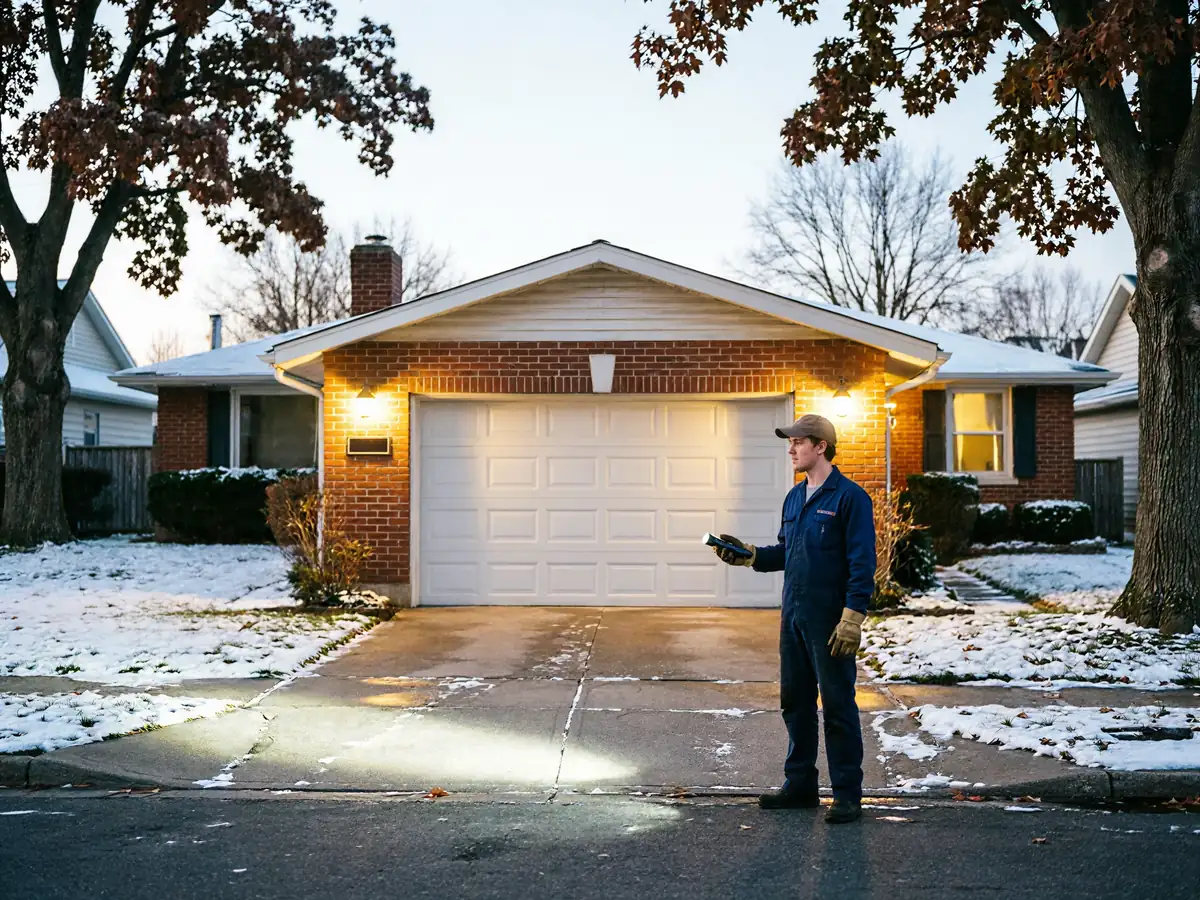
Why Safety Sensors Drift on Des Plaines Garage Doors
Des Plaines homes built 1938-1996 see sensor misalignment from slab settling and cold swings. Here's why your garage door opener's eyes drift out of line.
Most garage doors around Des Plaines sit on slabs poured between 1938 and 1996
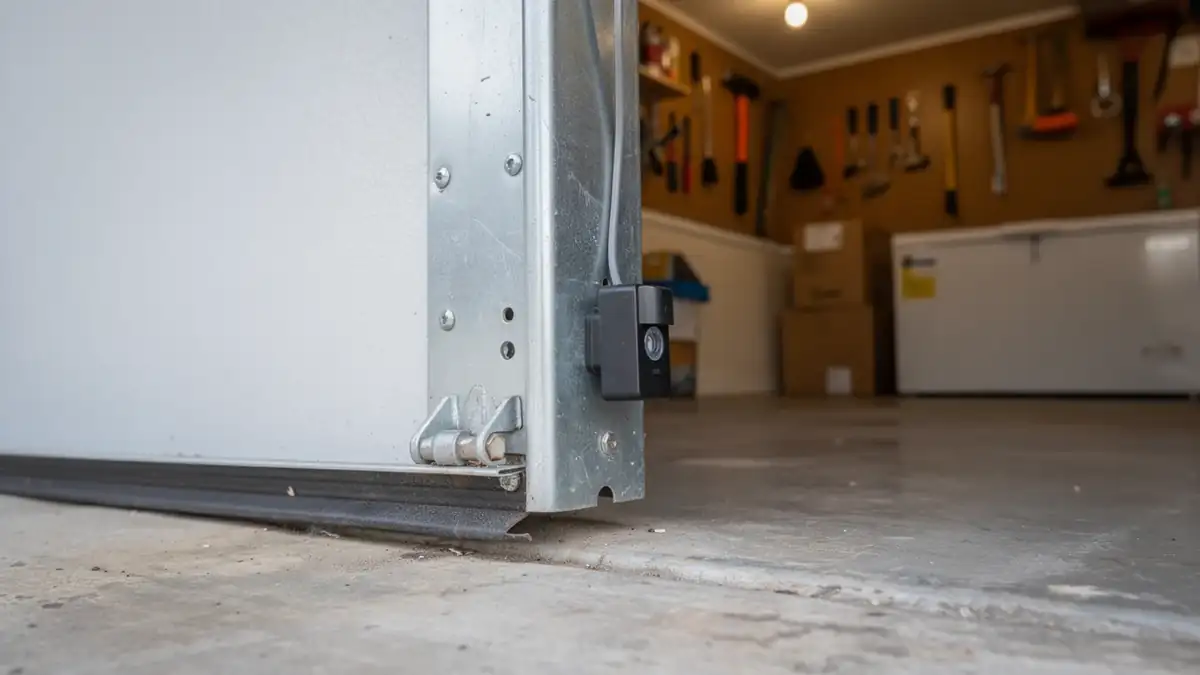
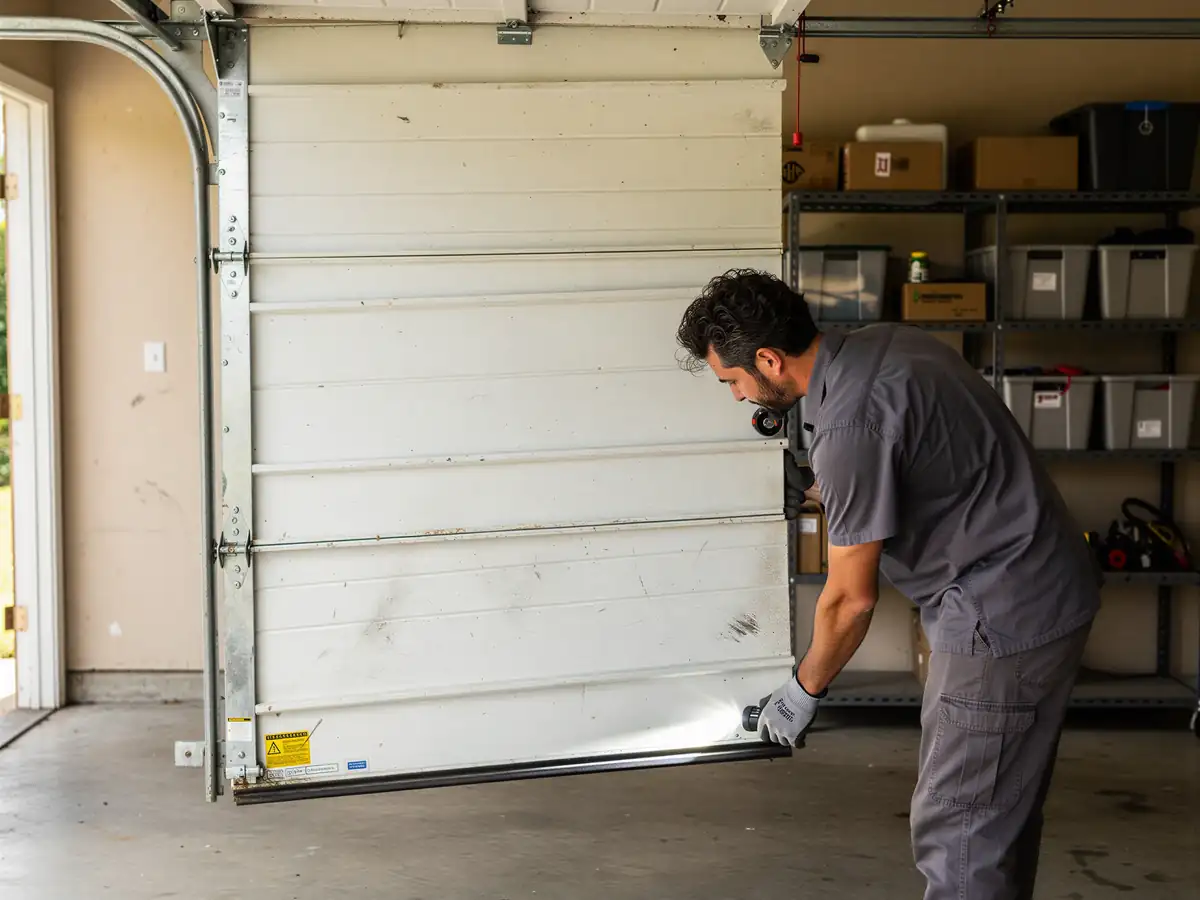
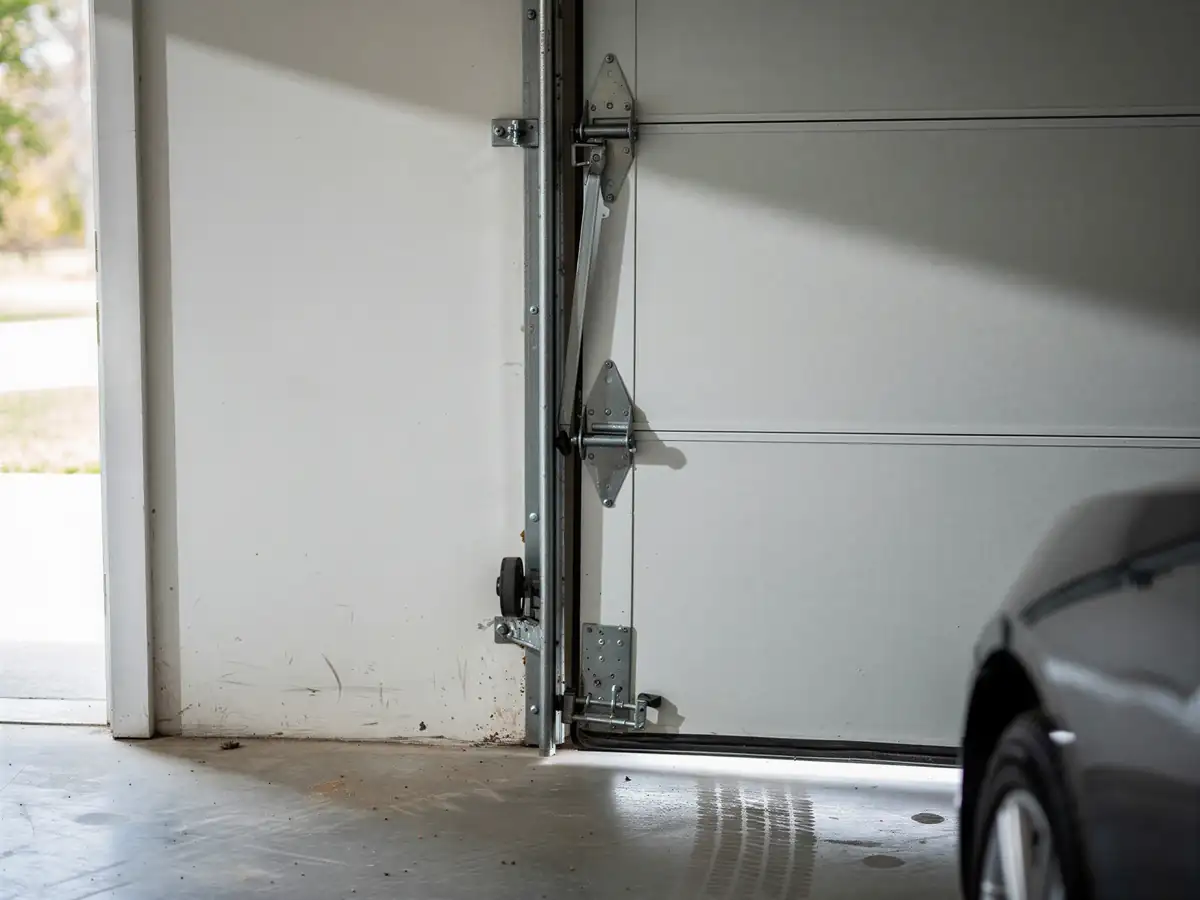
With a lot of that stock dating to the 1960s and 70s. Concrete that age has had decades to settle, and it rarely settles evenly on both sides of a garage opening. The safety sensors - the two small eyes mounted a few inches off the floor on either side of the track - get bolted to brackets that are tied to the track, and the track is tied to the framing. When one side of a slab drops a fraction of an inch more than the other over fifty-plus years, the whole alignment shifts just enough that the beam between the sensors no longer lines up dead center.
02
On top of that, this is a cold-climate area with real seasonal swings
Steel track brackets expand and contract across a Chicago-area winter-to-summer range, and the mounting screws that held tight when a house was new can work loose a little more each freeze-thaw cycle. None of this is dramatic. It's small, cumulative movement, and it's exactly the kind of thing a door built in 1972 has had a lot of years to accumulate.
When Waiting Is Fine
If your door closes all the way and reverses properly when something breaks the beam, a sensor that's slightly out of true alignment but still working doesn't need an emergency call. A lot of owners with older, settled slabs live for years with sensors that are a hair off-center and never have an issue, because the beam is still wide enough to connect.
If the lights on both sensors are solid and the door operates normally, you can leave it alone and just keep an eye on it during the next cold snap, when brackets tend to shift the most. We're not going to tell you to call over something that's working.
The Problem
The trouble starts when the drift crosses a threshold and the beam breaks intermittently - the door closes fine most days, then suddenly reverses for no obvious reason, or refuses to close at all and one sensor light starts blinking. On houses from the 1960s and 70s stock that make up most of this area, that's almost always slab movement plus bracket fatigue working together rather than one single cause. A sensor that's drifted enough to fail intermittently in July can fail completely once the cold sets in and the metal contracts a bit more.
We don't rewire or re-route old sensor cable runs as a quick fix if the insulation's cracked from age - at that point patching it is a short-term answer, and we'll say so rather than charge for a repair that won't hold through another winter.
What to Check
01
Start by looking at the two brackets, not the sensor eyes themselves
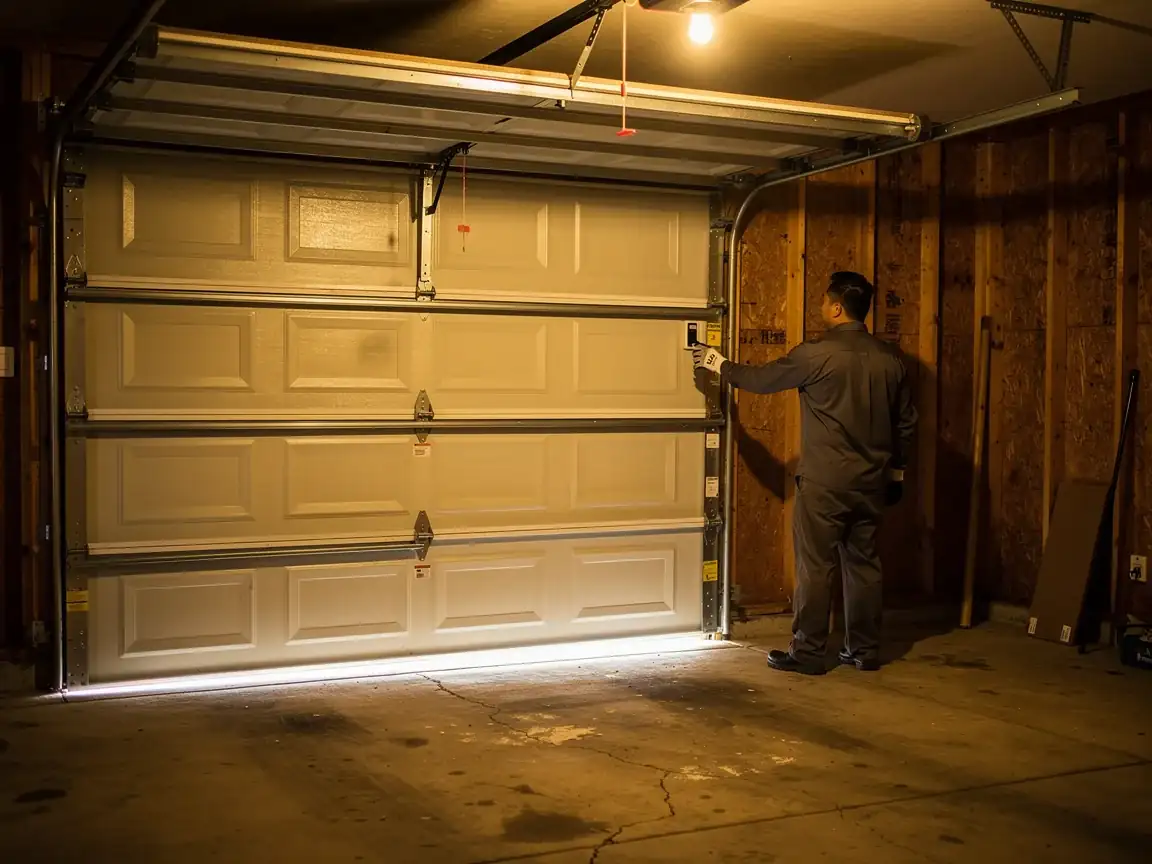
On a garage built in this area's typical 1938-1996 window, check whether the bracket on one side sits noticeably higher or lower than the other, or whether the mounting screws have backed out enough to let the bracket rock when you touch it. Wipe both lenses, since garage dust and winter salt residue block the beam just like misalignment does.
02
If the lights are on but one is dim or flickering, loosen the wing nut, re-level it by eye against the other sensor
And snug it back down. If the bracket itself is bent or the slab beneath it has visibly dropped, that's a hardware fix, not a cleaning job, and it's worth having someone look at the track alignment at the same time.
Straight answers about garage door repair in Des Plaines. Still unsure? Ask us directly.
Why did my garage door sensors suddenly stop working in the cold?
Steel brackets contract in cold weather, and on a slab that's had decades to settle unevenly, that extra contraction can be enough to push an already-marginal sensor beam out of alignment. It's common on older Des Plaines-area houses once temperatures drop hard.
Can I fix sensor drift myself?
Often yes. Loosen the wing nut on each bracket, sight down the beam so both lenses face each other directly, and retighten. If the bracket is bent or the mounting screws won't hold because the wood or slab anchor has worn out, that's a hardware repair, not an adjustment.
Is sensor drift related to my opener age or my house age?
It's more about the slab and bracket than the opener itself. Houses in this area built between 1938 and 1996 have had enough time for uneven settling, which shifts the track and the brackets bolted to it, and that's usually the real source of drift.