Opener Installation for Bartlett's 1990s Garage Doors
Opener installs for Bartlett's 1990s-era doors - chain and belt drive units that match the original track hardware, installed by the crew that drives out from Des Plaines.
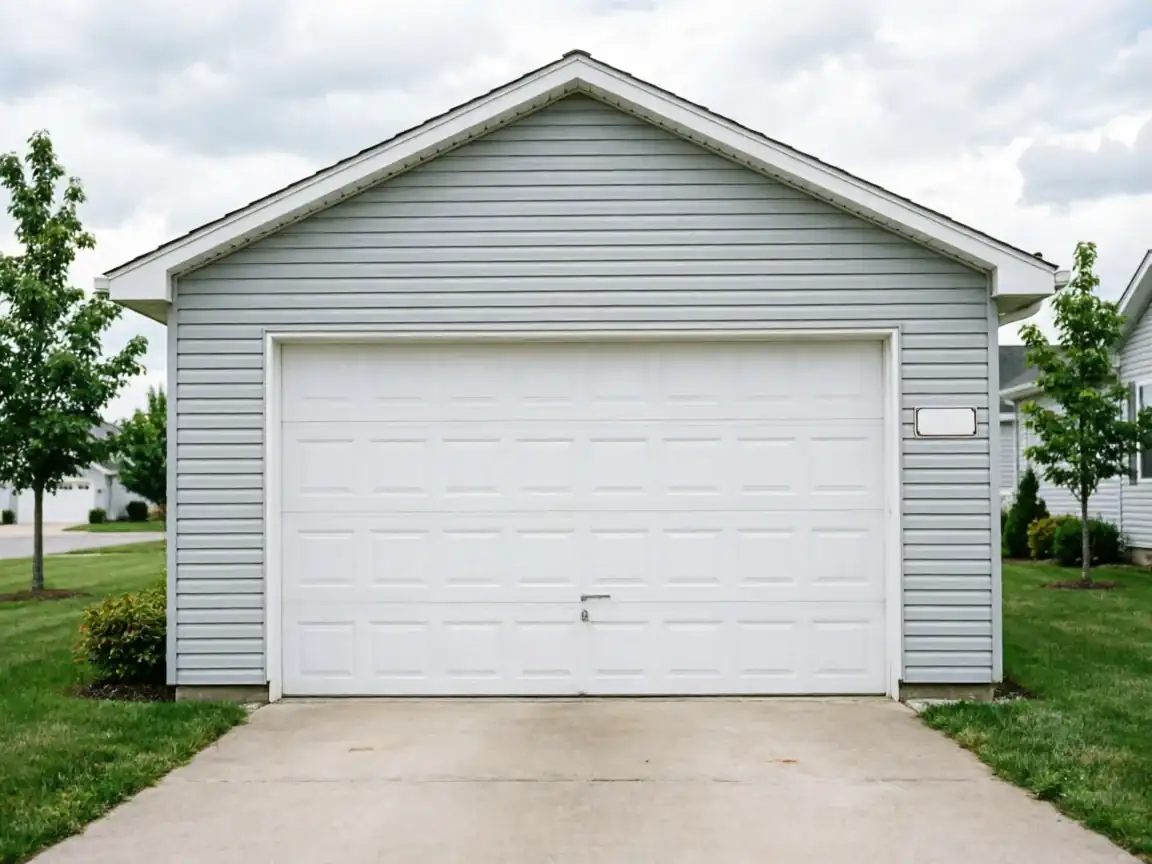
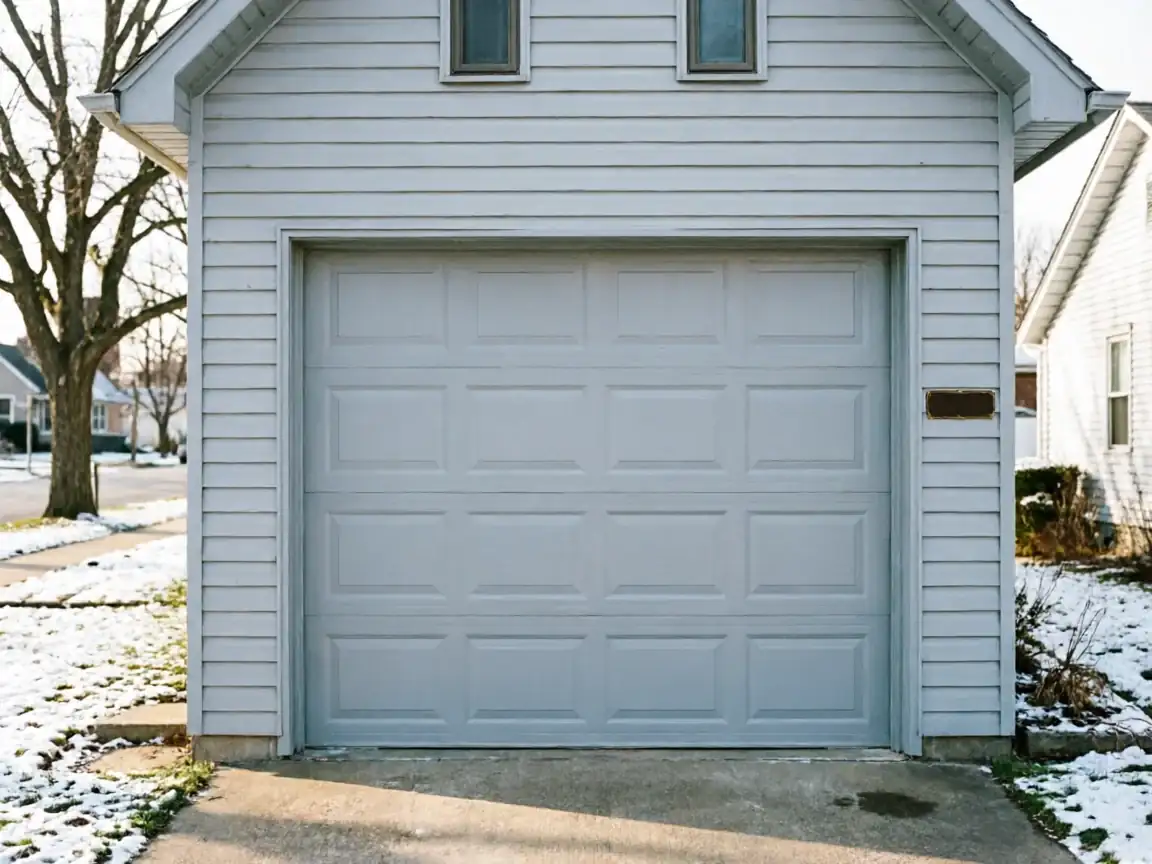
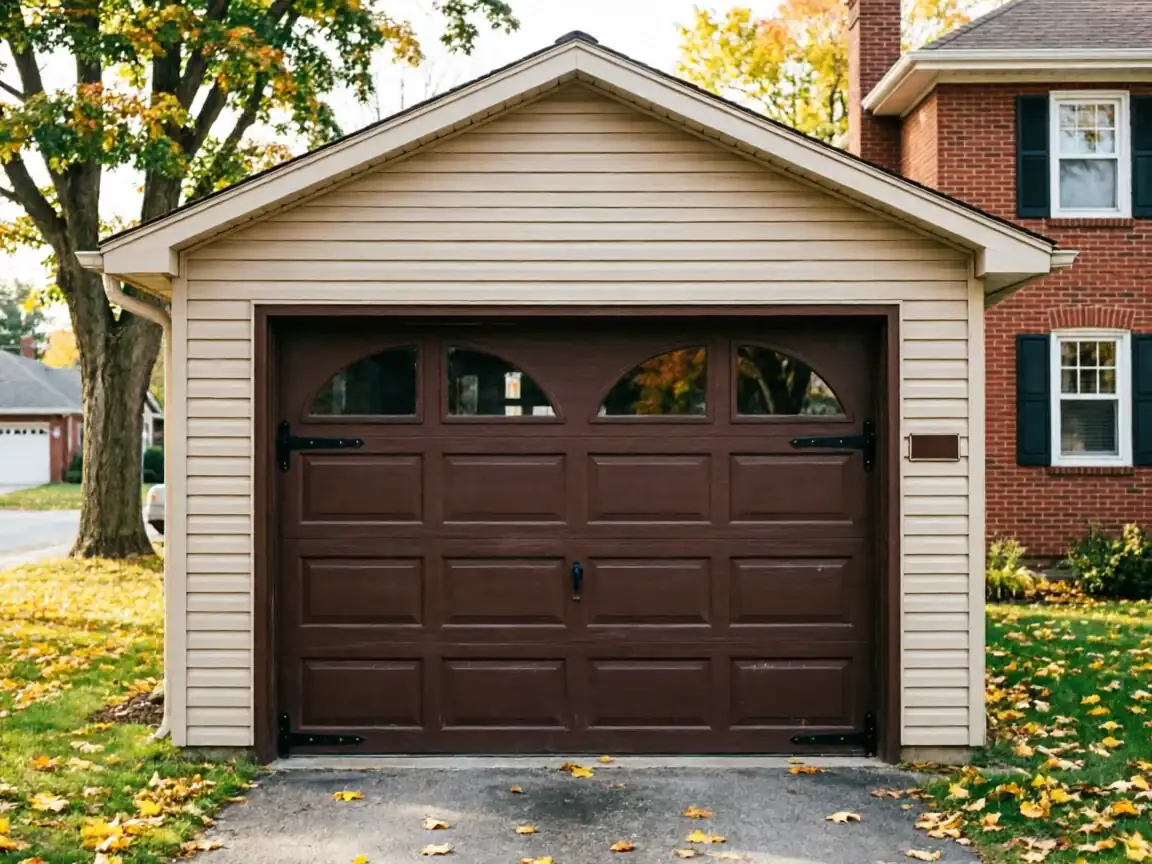
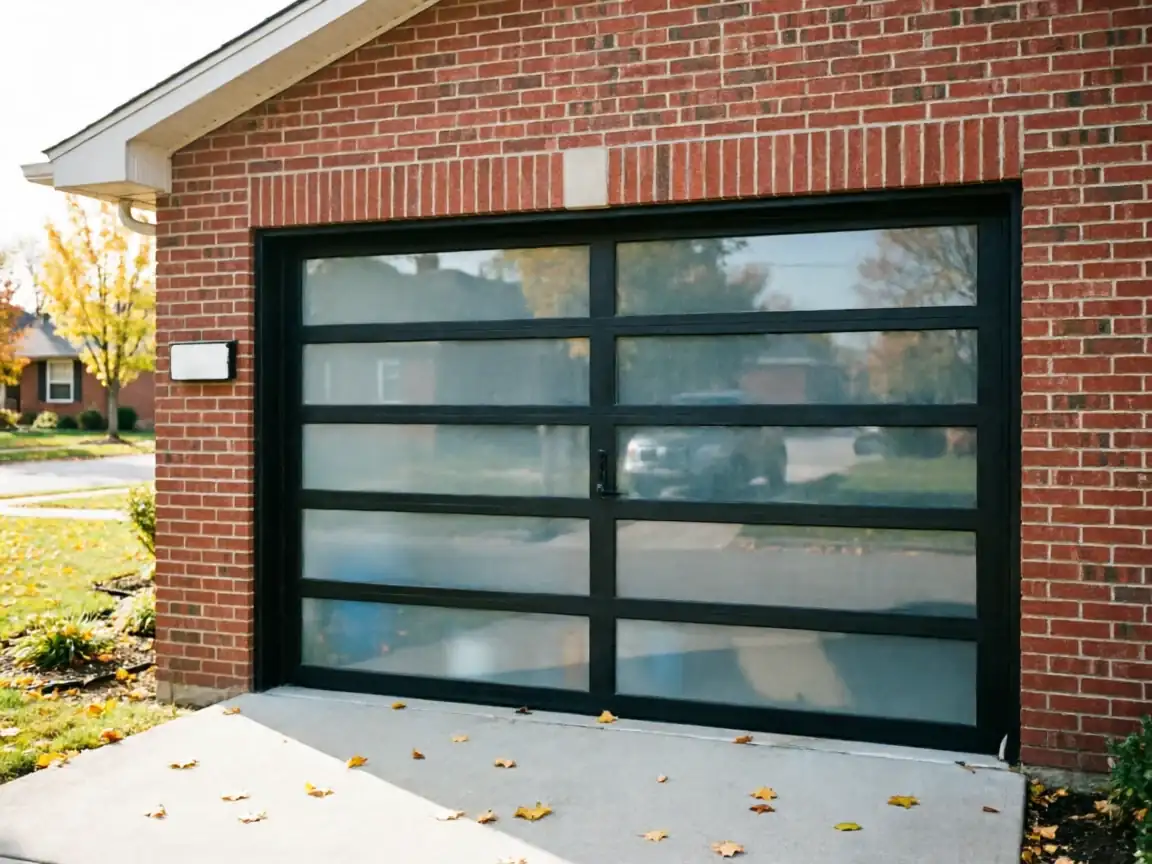
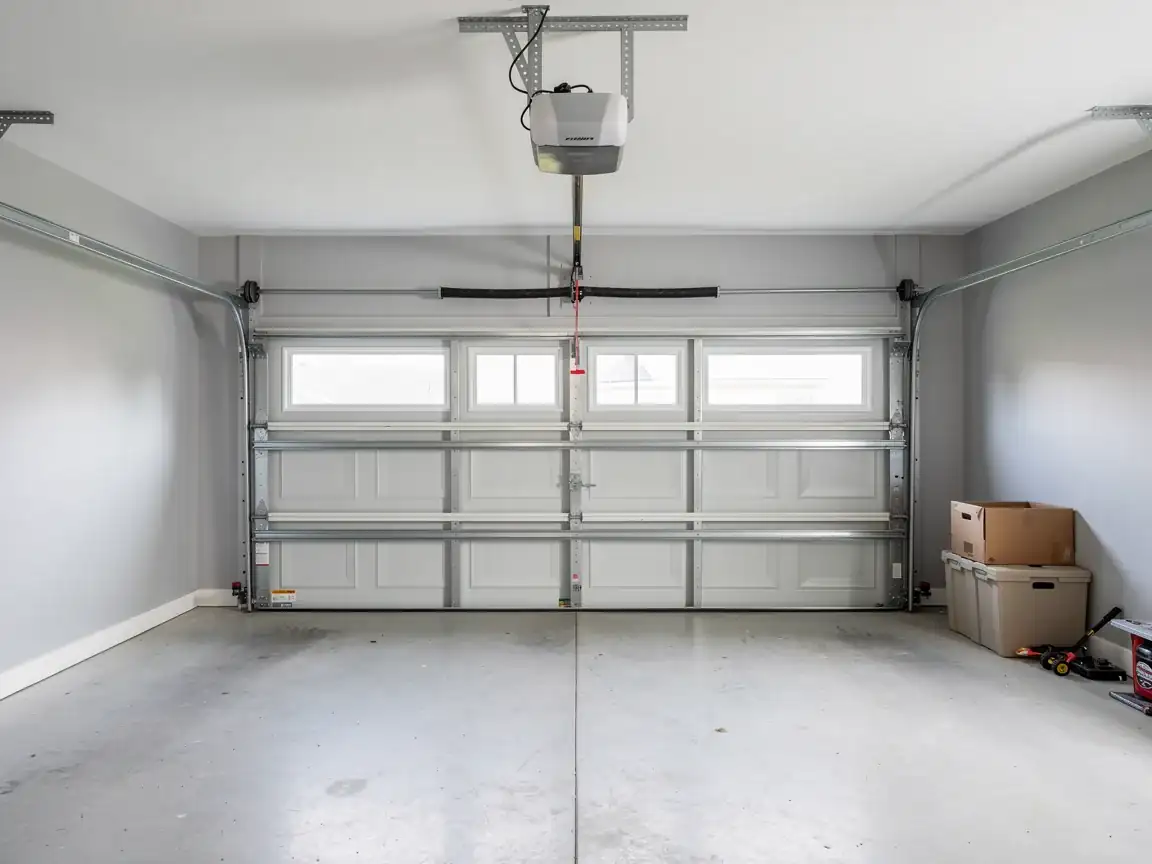
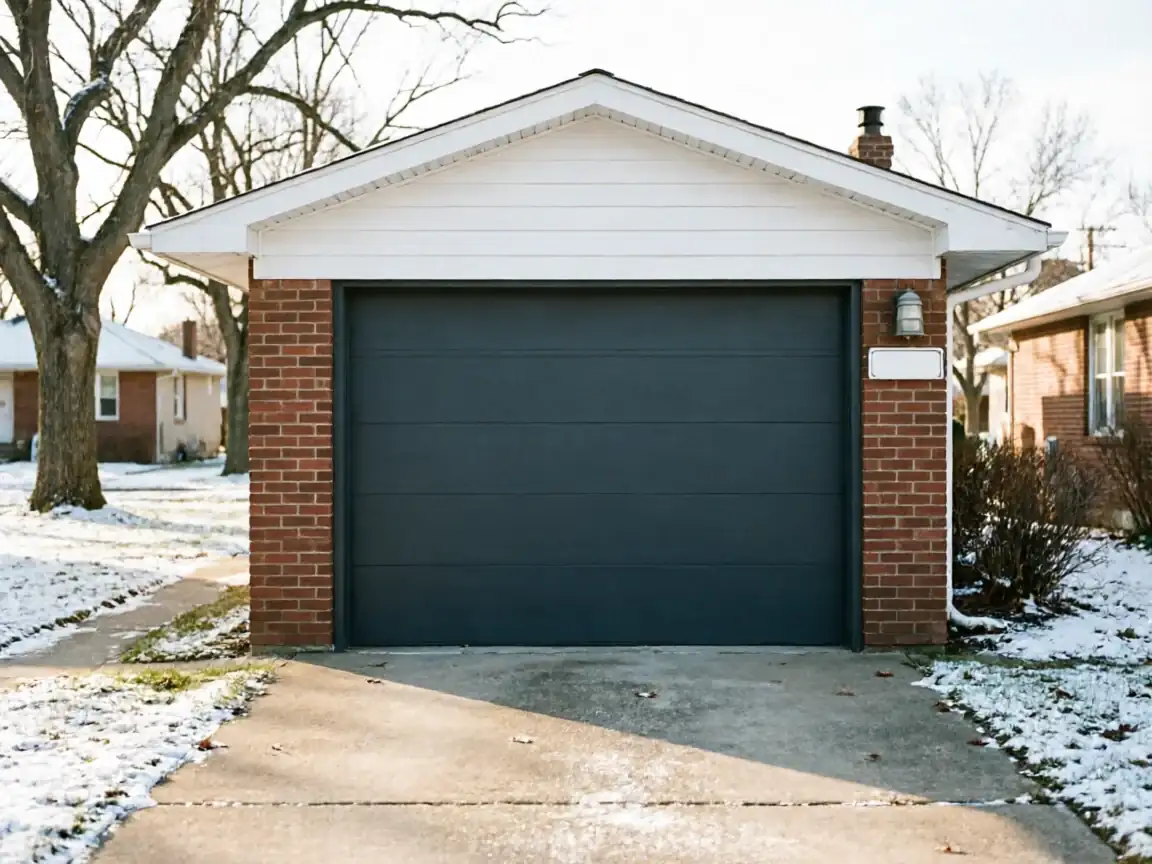
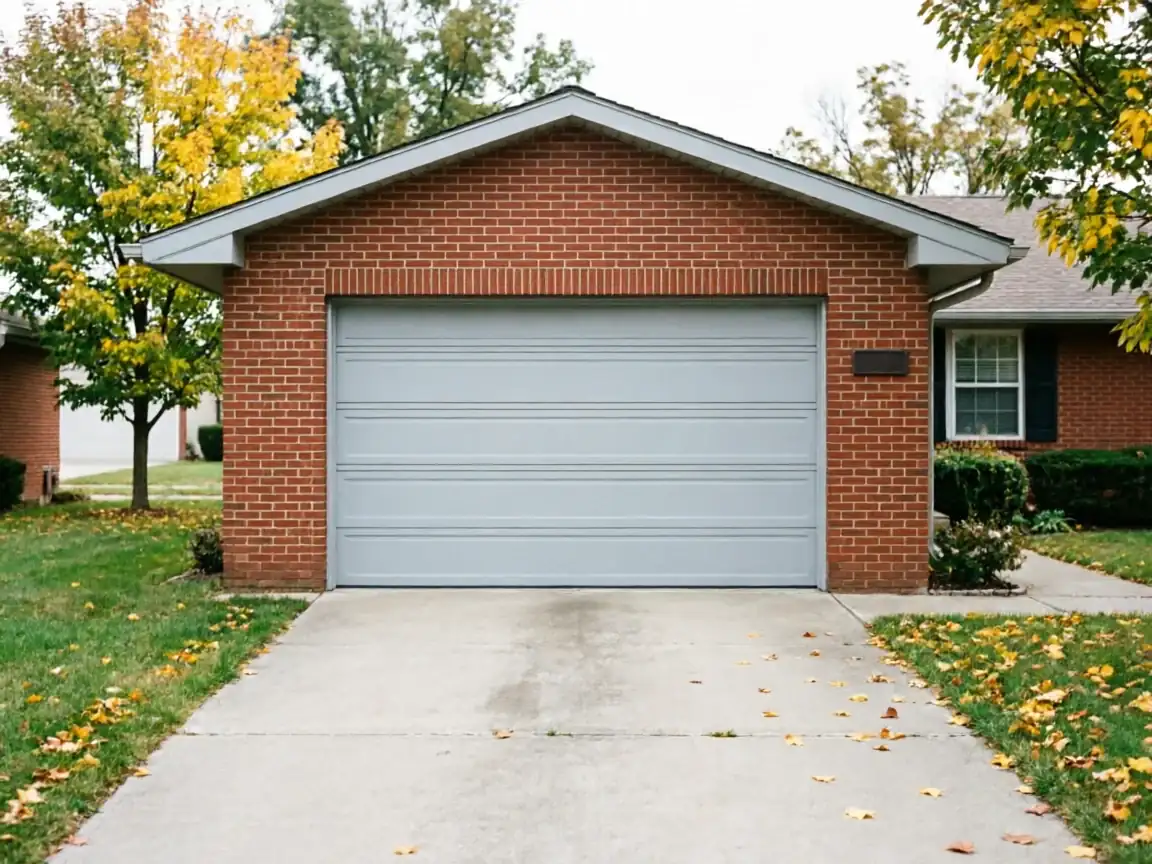
Which means the doors are steel sectional units on standard torsion or extension springs, sized for the two-car garages that came standard with houses of that era. That's a newer, more uniform setup than you'll find in the older parts of our coverage area, where doors from the 1950s and 60s still run oddball hardware. A new opener on a door like this is usually a straightforward swap - the rail length, header bracket, and door weight are all pretty standard for the period.
02
That said, doing it yourself is riskier than the box makes it look
The opener itself bolts up in an afternoon, but setting travel limits, force settings, and the safety reversal correctly on a 30-year-old door takes more than reading the manual once. We've seen openers installed by homeowners that technically run but don't reverse properly when they hit something, which isn't a small thing with kids or pets around. If you're comfortable on a ladder and patient with wiring, it's doable. If not, it's one of the jobs worth paying for.
What Can Go Wrong
A door built in 1992 is now more than thirty years old, and the openers installed with those original builds are well past the point where they should still be running. Chain-drive units from that generation wear out their drive gear kits, and the circuit boards that run the safety reversal and remote signal start failing in ways that aren't always obvious - the door still goes up and down, but the logic board is one power surge from dead.
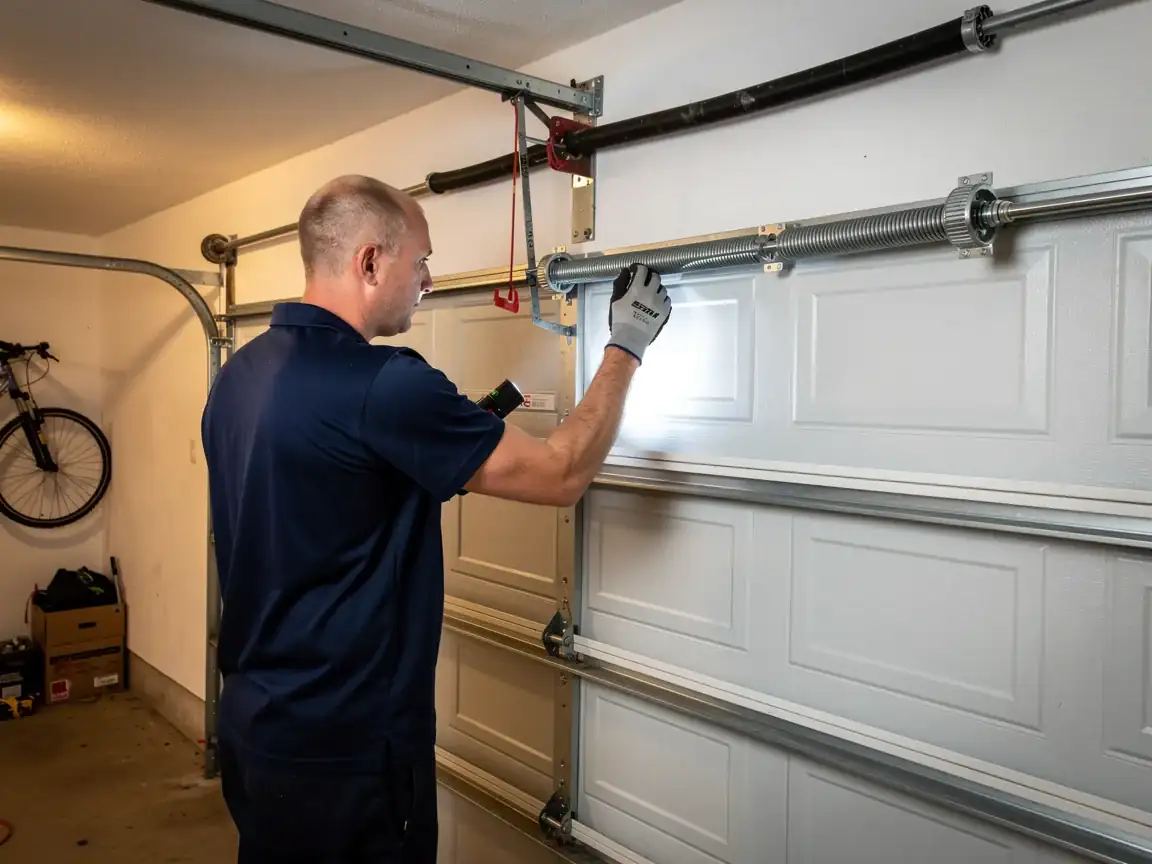
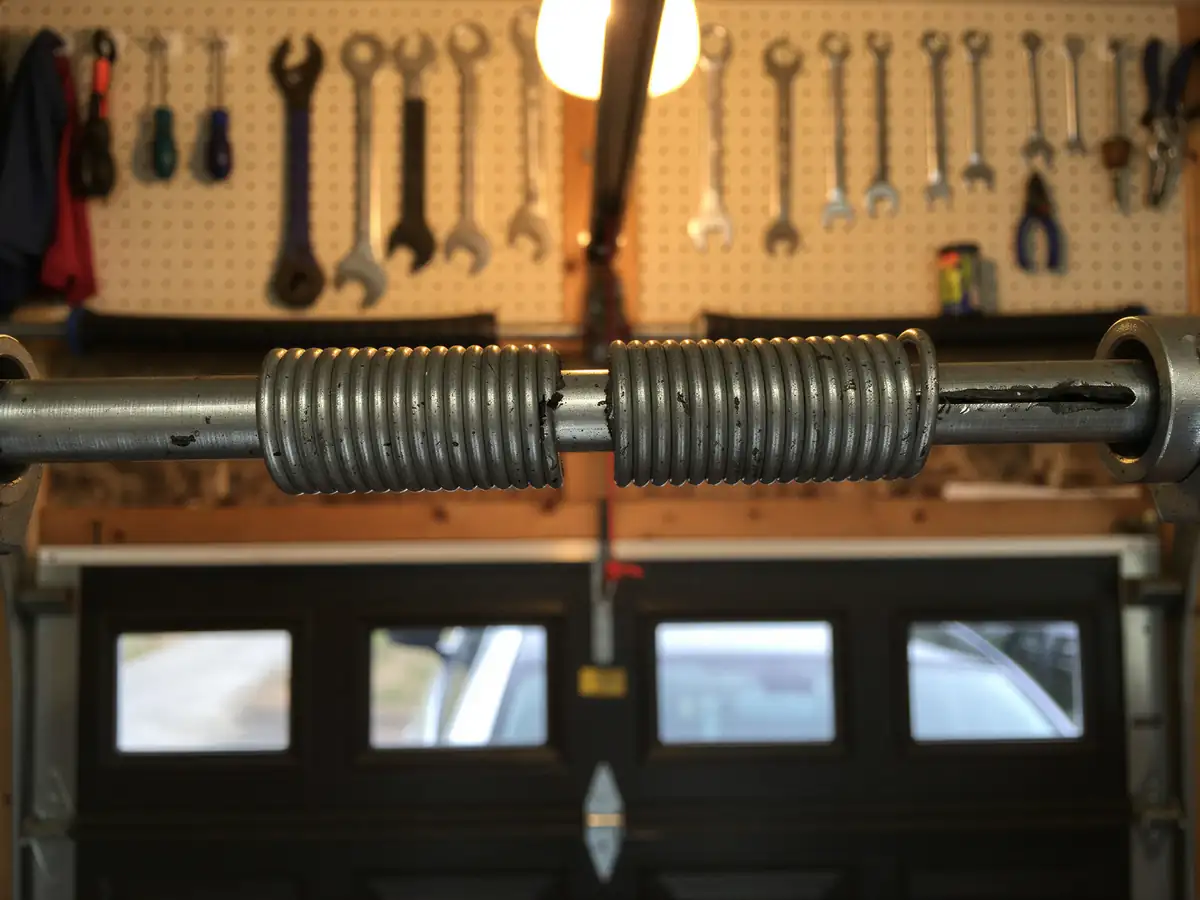
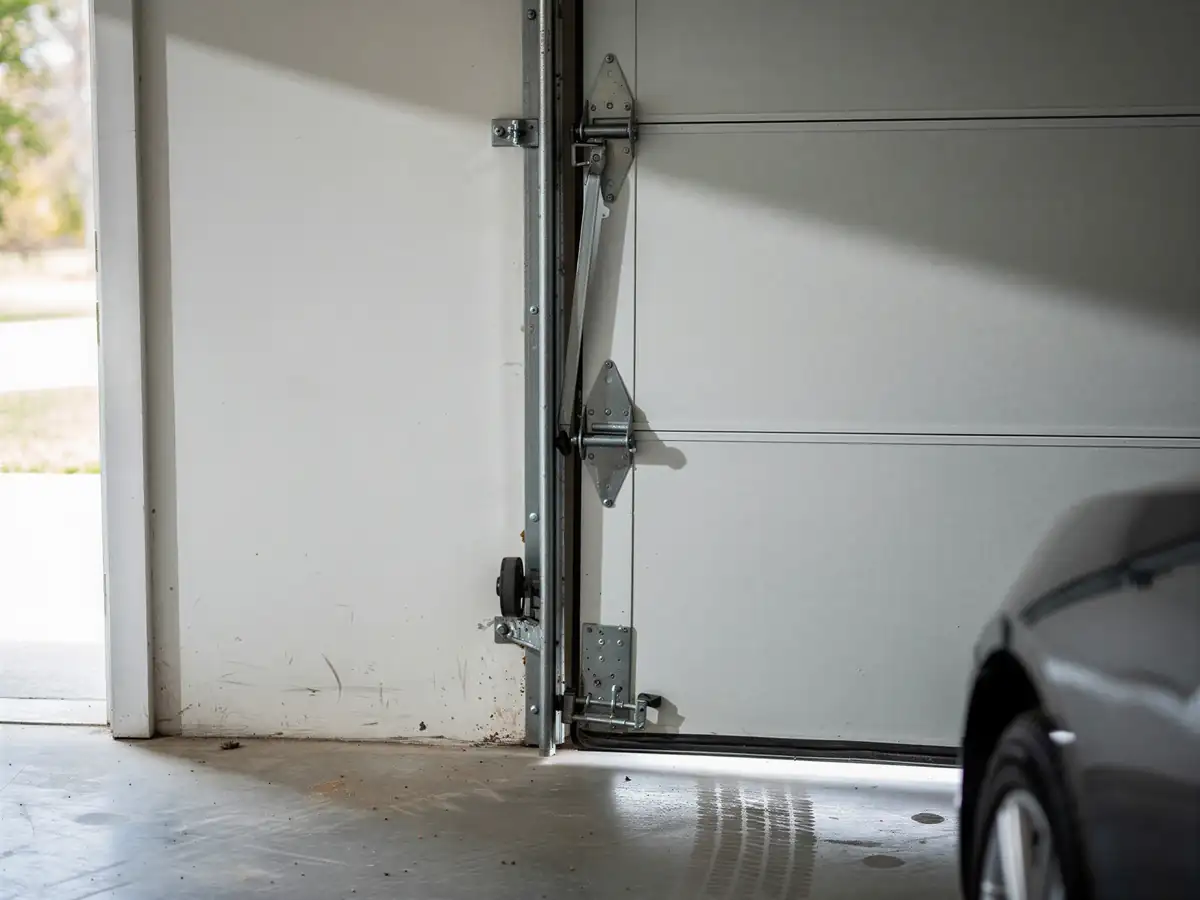
We also see brackets and rail sections that have sagged slightly over three decades, which throws off alignment on a new opener even when the old one still worked fine. And because Bartlett's climate runs cold through the winter, cold-stiffened grease in an old chain or screw drive can mask a motor that's actually struggling, so a unit that seems fine in July labors hard in January. None of this means every old opener needs replacing today - some are fine for a few more years - but it's worth having someone look at the rail and bracket condition before you install anything new on top of them.
Getting It Booked In
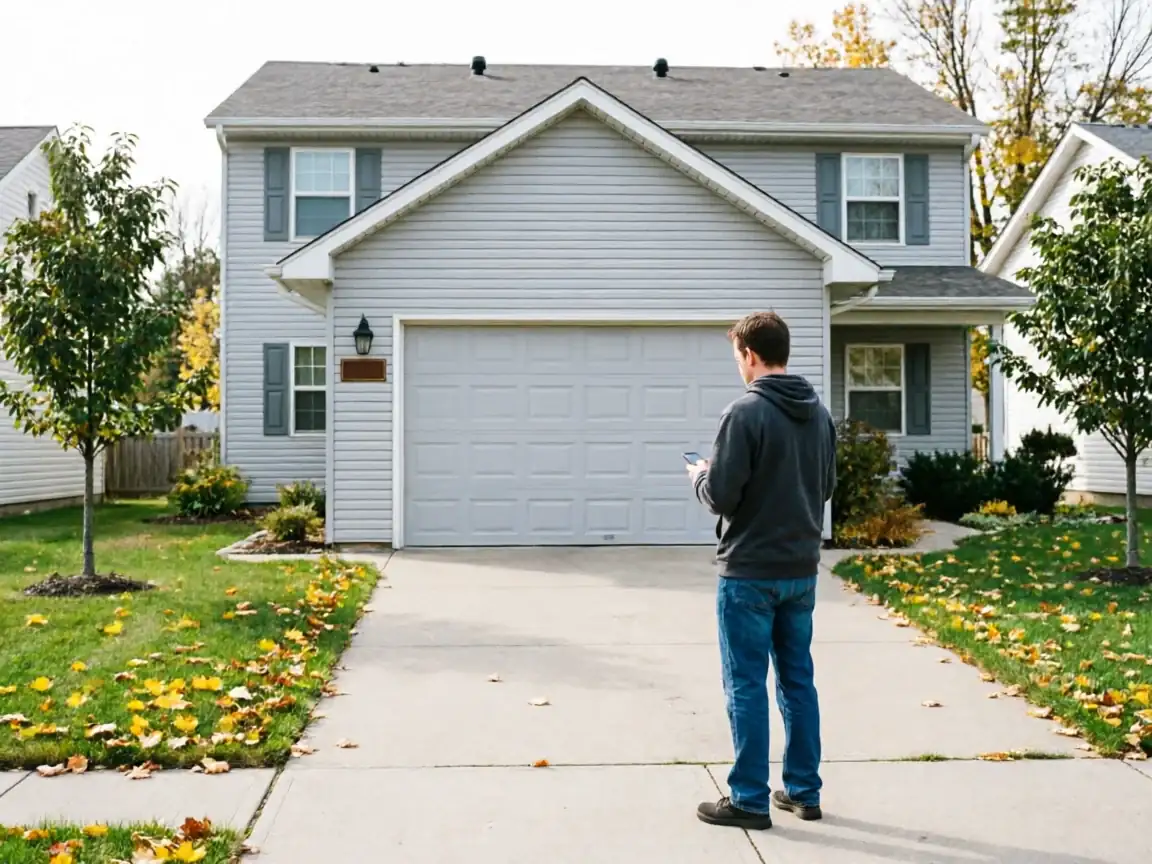
We run out of Des Plaines, about 15 miles from Bartlett, so this isn't a job we fit in on short notice the way we might closer to home. We schedule the trip, which means picking a day and a window rather than calling and having someone show up within the hour. Once it's on the books, the install itself doesn't take any longer than it would if we were next door - it's the getting-there part that needs a little lead time.
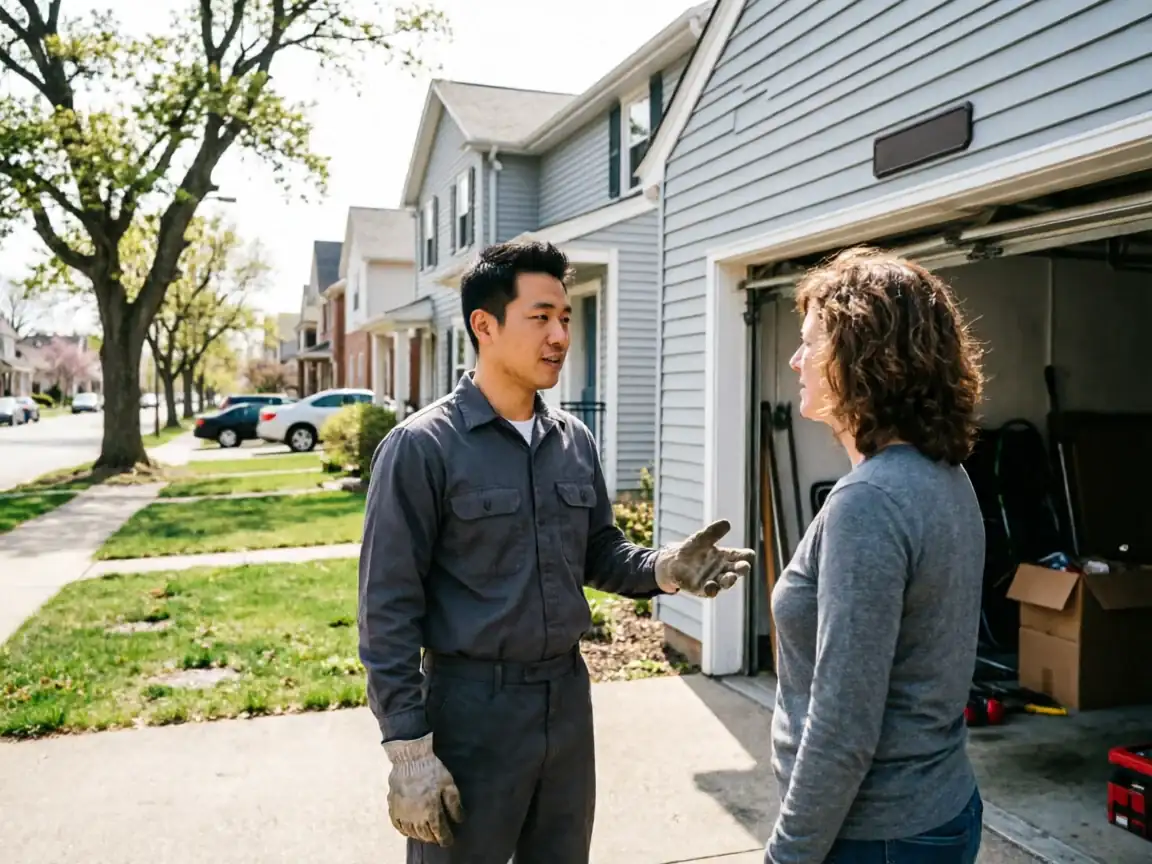
If you're replacing an opener rather than dealing with a sudden failure, that's actually the easier case to schedule around, since it's not an emergency and we can plan the trip for a day that works for both of us. Have your garage measurements and a sense of what's currently installed ready when you call - chain, belt, or screw drive, and roughly how old the current unit is - so we can bring the right opener and hardware on the truck instead of making a second trip.
What It Costs
01
We don't have a posted price list for opener installs in Bartlett specifically
And we'd rather not throw out a number that doesn't match what your door actually needs. Cost depends on the opener type - chain, belt, or screw drive - horsepower, whether you want battery backup or smart-phone control, and whether the existing rail and bracket can be reused or need replacing along with the motor unit.
02
What we can tell you is that Bartlett households run a higher median income than the rest of our coverage area
Which tends to mean more requests for the quieter belt-drive units and battery backup options rather than the base chain-drive model - but that's a preference, not a requirement. A straightforward swap onto existing, sound hardware costs less than a job where we're also replacing a sagging rail or worn brackets from the original 1990s install. We'll give you a real number once we've seen the door and opener in person.
Parts We Carry
For a 1990s-built garage like the ones common in Bartlett, we stock chain-drive and belt-drive openers sized to match standard sectional door weights, along with the rail extensions and header brackets that fit the ceiling heights typical of that era's two-car garages. We carry battery backup units too, which matter more here given the cold winters - a dead opener during a power outage in January is a worse problem than the same outage in June.
We also keep safety sensor pairs, remote receivers, and wall control units on the truck, since those are the parts most likely to need replacing alongside the opener itself on a door this age - the old sensors often don't talk reliably to a new motor unit even when they still physically work. One limitation worth naming: we don't carry every proprietary remote or keypad model ever made, so if you've got an older branded accessory you want to keep using, let us know ahead of time and we'll check compatibility before the appointment rather than after.
What the Fix Involves
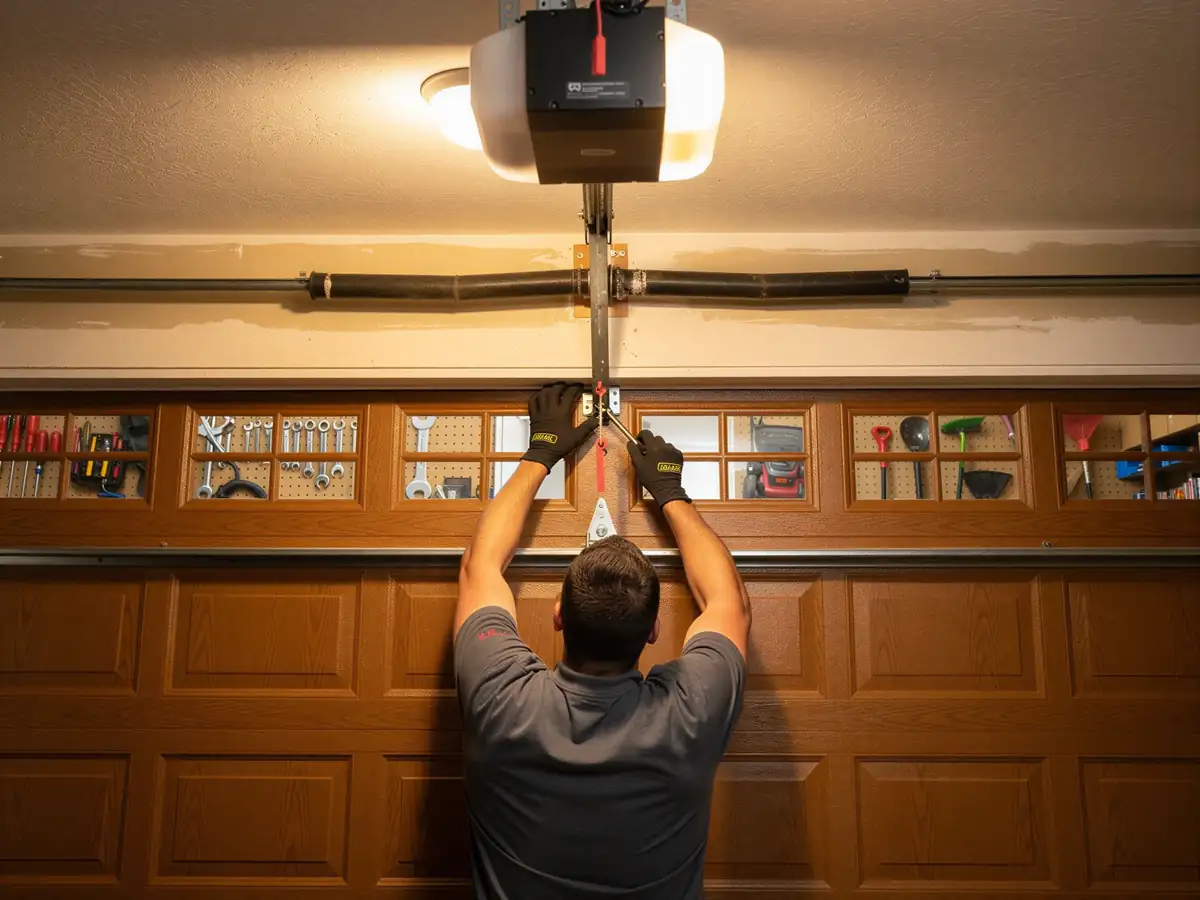
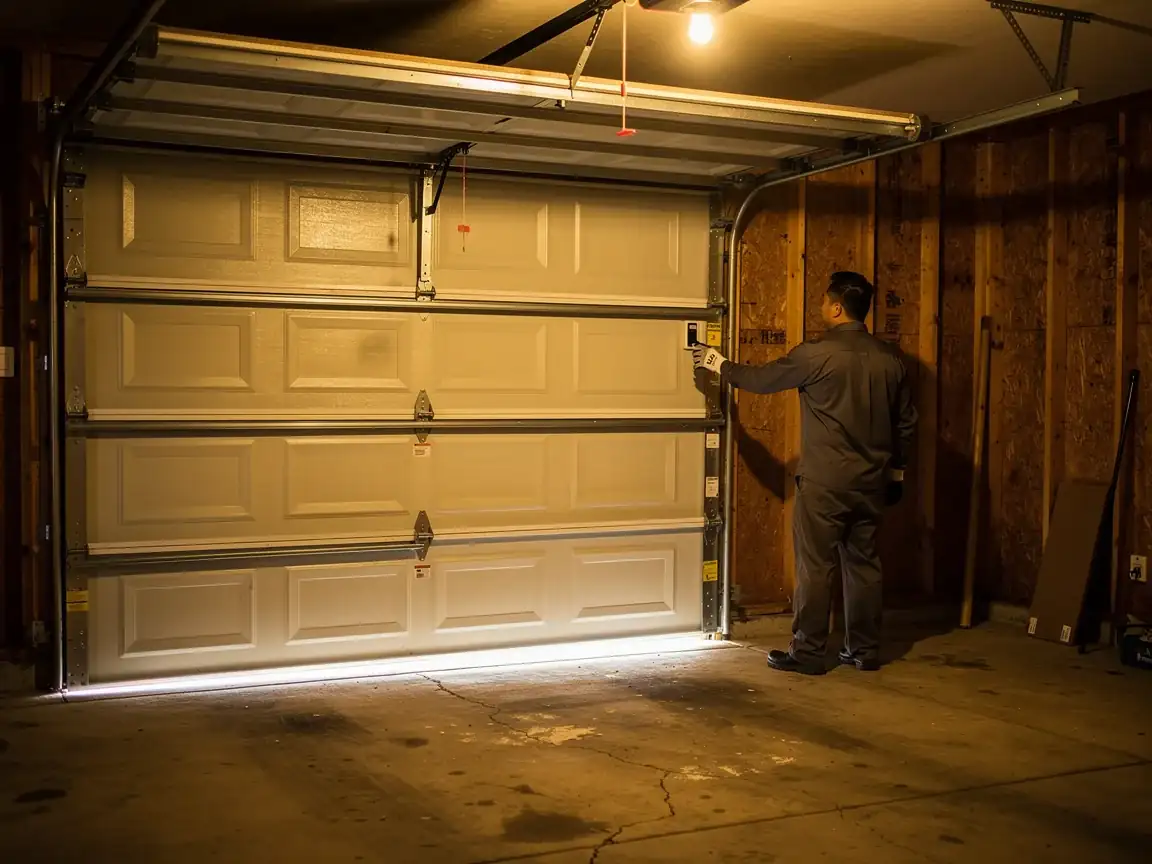
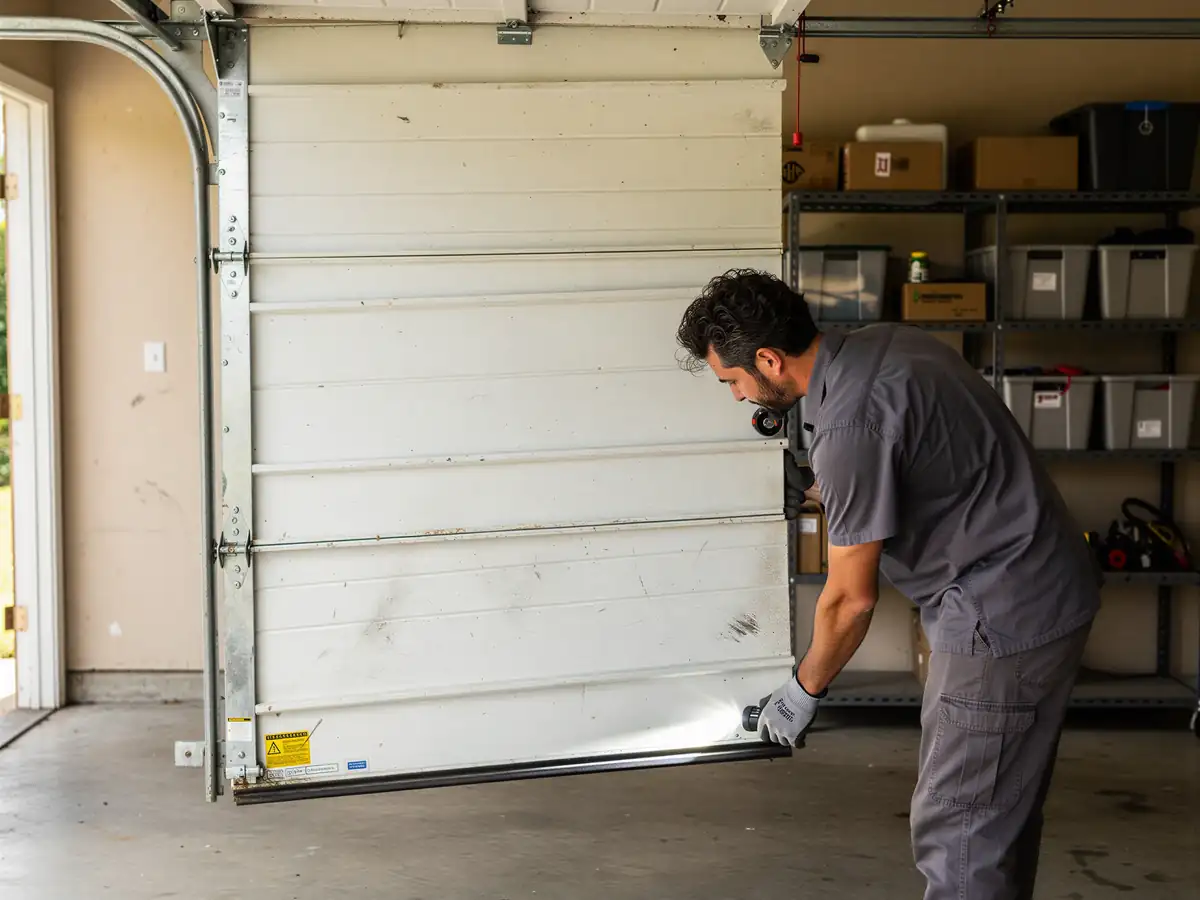
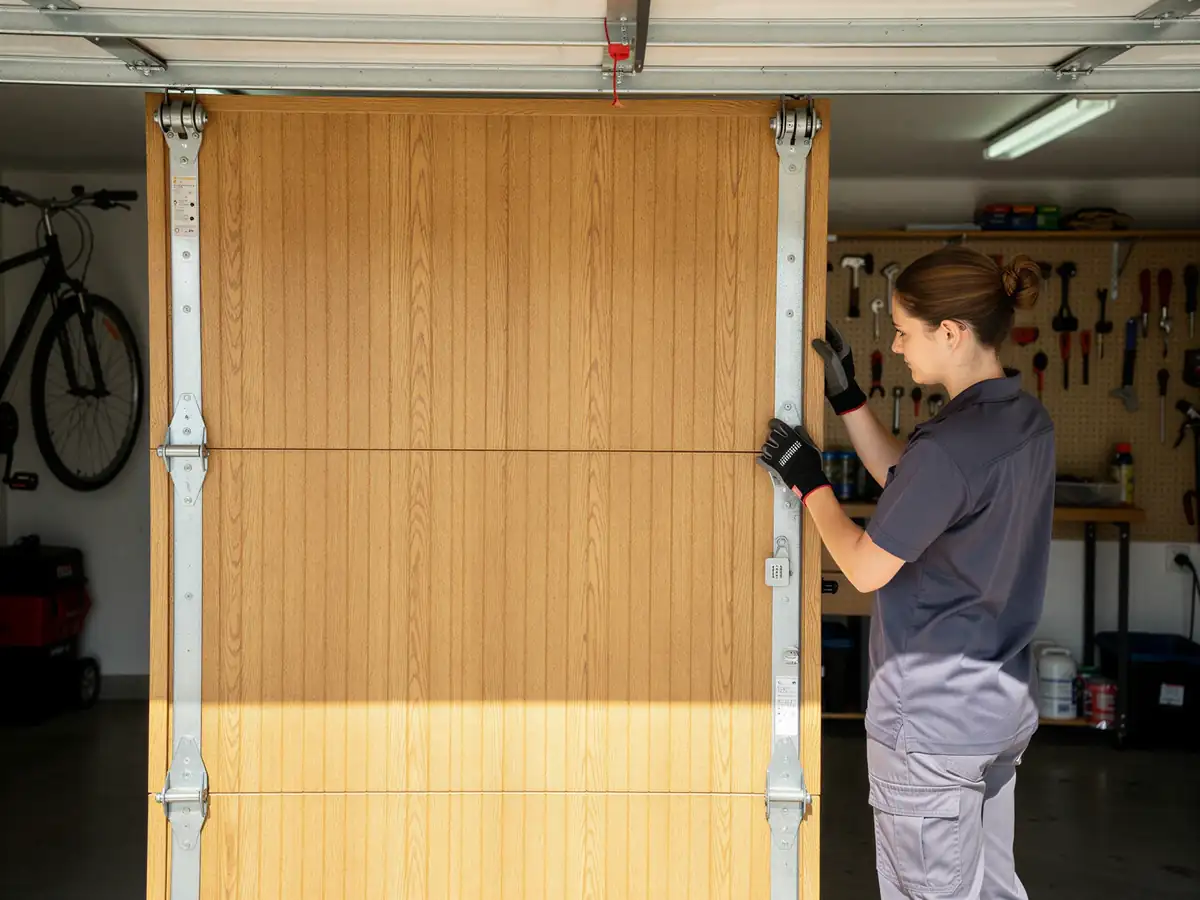
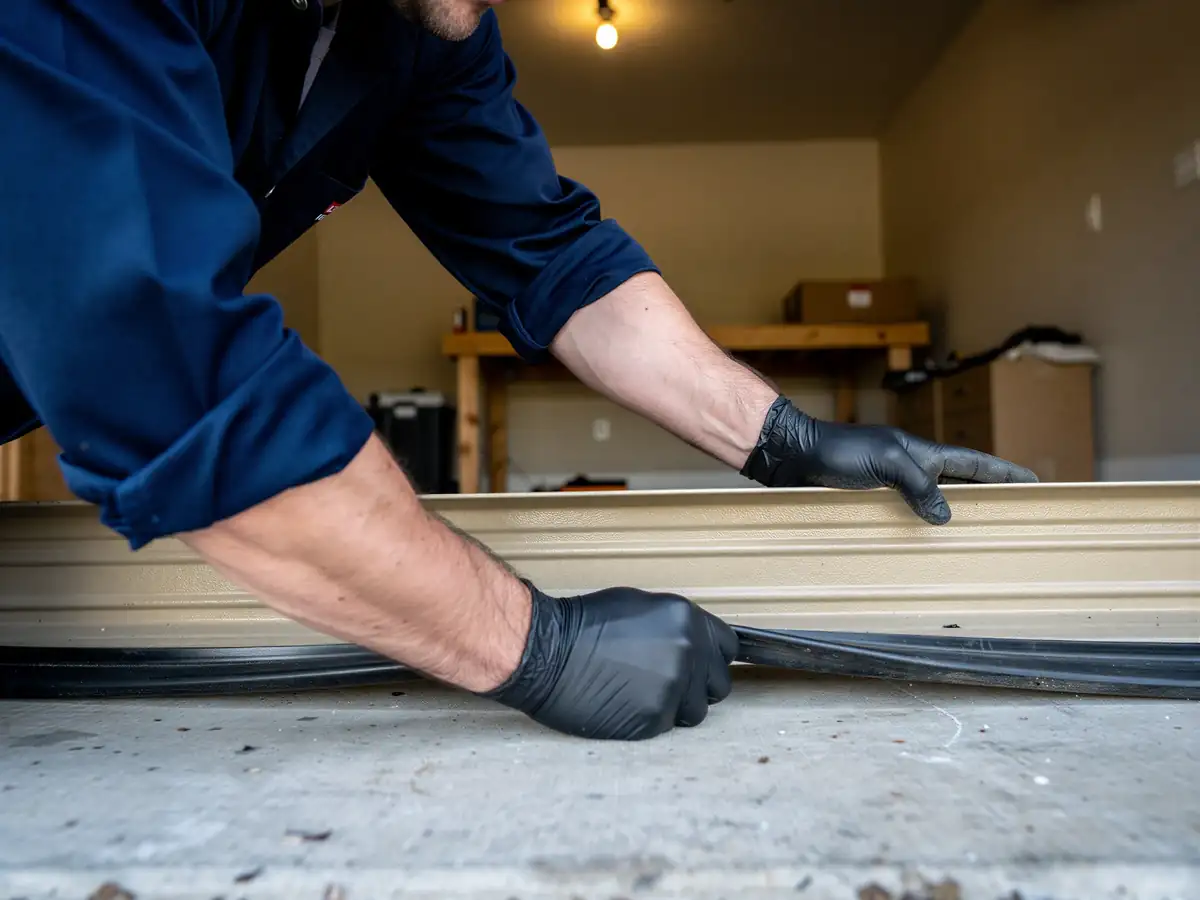
Installing a new opener on a door built around 1992 usually starts with pulling the old motor unit and rail, then checking the header bracket and the track alignment before anything new goes up - thirty years of use can shift things enough that a new opener fights the door if we just bolt it on top of the old mounting points. From there it's mounting the new rail, setting the trolley and arm to the door, and wiring in the safety sensors at the height code calls for.
Once it's up, we set the travel limits so the door closes fully without slamming and opens without stalling, then test the force setting and safety reversal by hand - the door needs to stop and reverse when it meets resistance, not just when it hits the floor. Last step is pairing remotes and any wall control, and running the door through a few full cycles to make sure nothing binds. On a door with sound track and spring hardware, the whole job doesn't take long; it's the condition of what's already there that decides how much else needs attention.
How it works
From “it’s stuck” to “it’s fixed”
01
Tell us what’s wrong
Describe the symptom - won’t open, loud bang, opener runs but the door won’t move.
02
On-site diagnosis
A technician tests the door under power and by hand and finds what actually failed.
03
Clear, up-front plan
You get the fix that’s needed and what drives the cost - before any work starts.
04
Repaired & tested
The repair is done, the door is set true and tested, and the work area left clean.
Next step
Not sure which repair your door needs in Des Plaines, IL? Describe what it’s doing - every job starts with a diagnosis.
Straight answers about garage door repair in Des Plaines. Still unsure? Ask us directly.
Will a new opener work with my existing garage door track from the early 90s?
Usually, yes, if the track and springs are in good shape. Most doors from that period use standard sectional hardware that pairs fine with a current opener. We check the rail, bracket, and spring condition before installing so the new motor isn't fighting worn hardware underneath it.
Do you carry battery backup openers for power outages in Bartlett?
Yes, we stock battery backup units. Given the cold winters here, a backup matters more than it might elsewhere - a dead opener during a January outage leaves a door stuck shut or open, which is worse than the same outage in warmer weather.
Why does scheduling take longer than for a company based closer to Bartlett?
We run out of Des Plaines, about 15 miles away, so opener installs here get scheduled rather than handled same-day. The install itself takes no longer once we arrive - it's just that we plan the trip in advance rather than fitting it in on short notice.
Is my opener old enough that I should replace it instead of repairing it?
If your house was built around the early 1990s, the original opener is likely past 30 years old. At that age, a failing gear kit or circuit board often costs close to what a new unit runs, so replacement usually makes more sense than repeated repairs on a motor that old.